Delhi to Spiti Valley (Kaza) is approximately 700 km via Shimla and 750 km via Manali. Total driving time to Kaza is 14–18 hours spread across 2 days on either route. HRTC Volvo buses depart from ISBT Kashmiri Gate, Delhi for Shimla nightly, from where onward buses connect to Kaza.
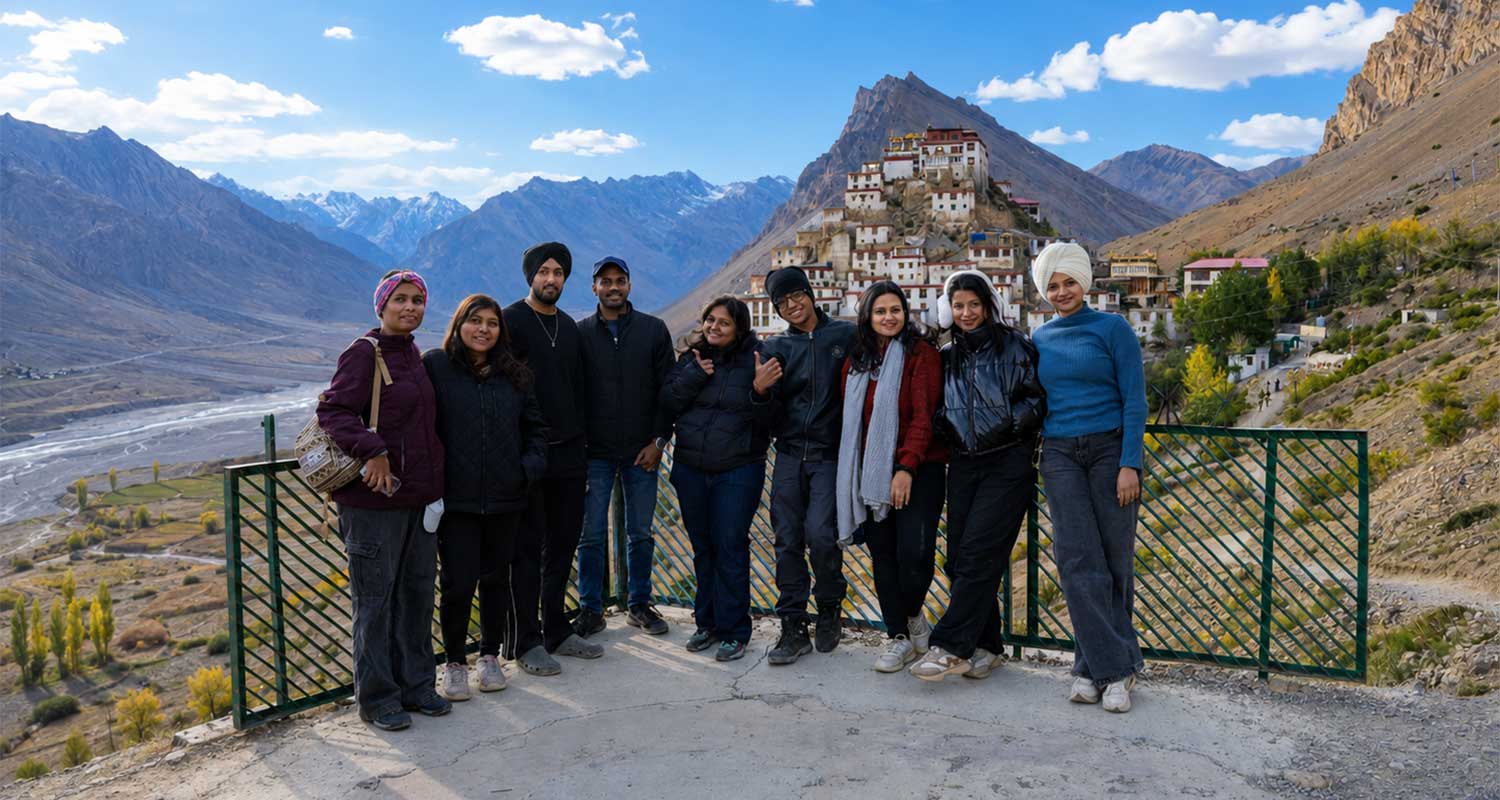
Travelling to Spiti? Join The Travel Story’s group departure — 6N/7D, starting from ₹17,999. We have batches on every Saturday.
Although you’ve been dreaming about Spiti Valley for months to see the raw and rugged mountains as dramatic as Ladakh, ancient monasteries like Tabo and Dhankar, and clear blue skies that seem to go on forever. But every time you search for how to get there from Delhi, you land on blogs that contradict each other or quote roads that are closed.
We get it. And we’re fixing that right now.
By the time you finish reading this, you’ll know exactly how far Spiti Valley is from Delhi, which route suits you best, the costs involved, and a 7-day itinerary you can follow without second-guessing yourself. Everything you need is right here, in one place.

Delhi to Spiti Valley Distance & Routes
The distance from Delhi to Spiti Valley (Kaza) sits at approximately 700 km via the Shimla route and 750 km via the Manali route — both spread across 2 to 3 days of driving. There’s no shortcut and you have to either drive through Shimla or Manali to reach Kaza. Both roads climb deep into the Himalayas and can be little challenging for first-timers. Recommended duration to reach Spiti from Delhi should be two or three days because it’s the smarter, safer way to arrive feeling good rather than completely exhausted.

Routes to Reach Spiti Valley from Delhi
Route 1: Via Shimla (Recommended)
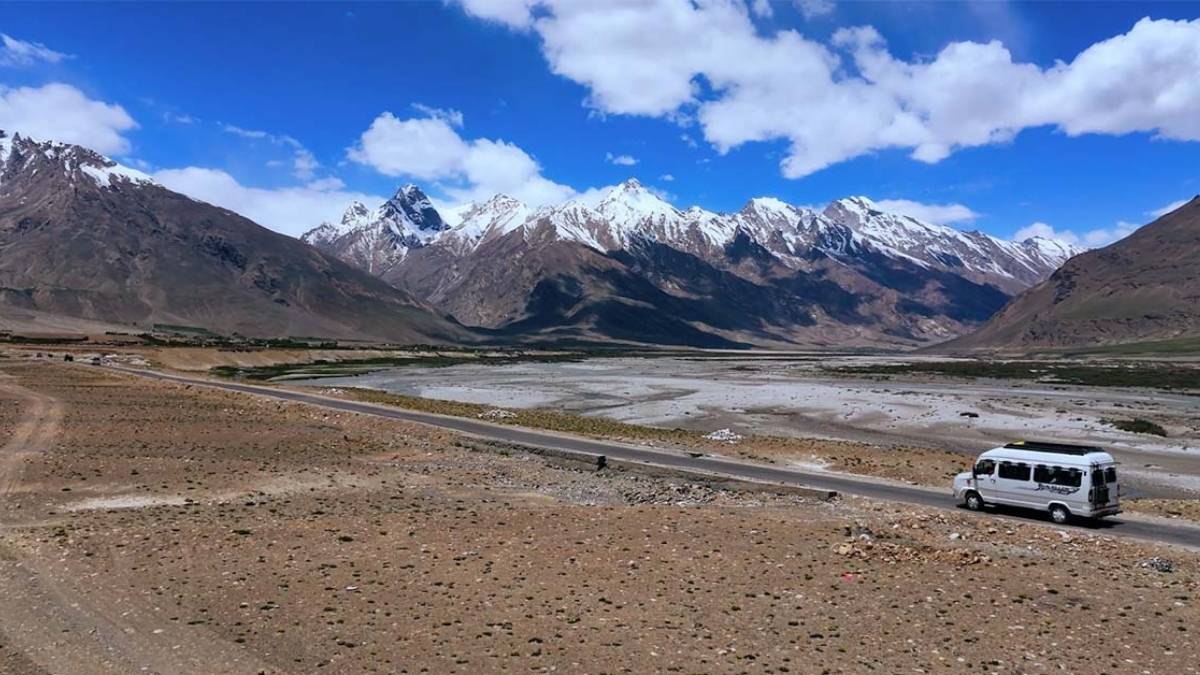
The most suitable route- Delhi–Shimla-Kaza-Manali is the one you can trust. Covering approximately 700 km over 2–3 days via NH5, the road eases you in gently — Along the way, you pass through some genuinely beautiful places like Shimla, get to see apple orchards of Narkanda, streets of Rampur, and cross the dangerous but one of the most scenic route- Indo-Tibet Highway. Each stop feels different from the last. Reckong Peo comes next, and then finally Kaza. The gradual altitude gain significantly reduces Acute Mountain Sickness (AMS) risk, road conditions remain reliable throughout, and unlike the Delhi to Spiti Valley by Manali route, this highway stays open year-round.

Route 2: Via Manali (Scenic & Adventurous)
For experienced drivers and adventure seekers, the Delhi to Spiti Valley via Manali route delivers the kind of road trip stories you’ll tell for years. Covering approximately 750 km over 2–3 days, the road takes you through Manali’s pine-covered valleys, the engineering marvel of the Atal Tunnel, the rugged high-altitude plains of Gramphu, and the legendary Kunzum Pass (4,551 m) before descending into Kaza. Open only from June to October, this route demands driving confidence but rewards you with the most dramatic, adrenaline-charged entry into Spiti Valley imaginable.
Pro Tip: Always verify road status on the HRTC website if you’re travelling from Manali route.

Delhi to Spiti Valley by Car
Travelling by car from Delhi to Spiti Valley is the most popular option — it gives you complete control over pace and stops. A 4-Wheel Drive or high-clearance SUV (Thar, Scorpio, Fortuner, Innova Crysta, Jimny) is strongly recommended. Sedans are not suitable beyond Nako on the Shimla route or on Kunzum Pass. The cost of fuel of the whole Spiti Trip will be between ₹6,000 to ₹12,000
Pro Tip: Choose Shimla route while going and Manali while returning for a complete circuit.

Delhi to Spiti Valley by Volvo Bus
The Delhi to Spiti Valley Volvo bus is the go-to for budget solo travellers. You can take a Volvo bus from Kashmiri Gate which takes about 8-9 hours approximately to reach Shimla. Generally the buses start operating in the evening. Another option is taking a direct bus to Rampur and then taking a local bus to Reckong Peo from where you can find a bus to Kaza.
Volvo bus prices starts from ₹1,000 to ₹2,000

Delhi to Spiti Valley by Train
There is no direct Delhi to Spiti Valley train — the valley has no rail connectivity. The closest railway station is Shimla. However, the train ride has beautiful views all the way to Shimla, passing through alpine dense forest and then proceeding your trip by road from Shimla.
Train tickets prices varies from ₹200 to ₹1,500

Perfect 7-Day Spiti Valley Itinerary from Delhi
- Day 1: Shimla to Sarahan (~200 km | 7–8 hours)
- Day 2: Sarahan to Kalpa (~100 km | 3–4 hours)
- Day 3: Kalpa to Tabo (~170 km | 6–7 hours)
- Day 4: Tabo to Kaza (~46-50 km | 1.5–2 hours)
- Day 5: Kaza Local Sightseeing (Key, Kibber, Hikkim, Komic, Langza)
- Day 6: Kaza to Chandrataal via Chicham Bridge (~90-100 km | 5–6 hours)
- Day 7: Chandrataal to Manali (~115 km | 5–6 hours)

FAQs: Delhi to Spiti Valley
Ans. A minimum of 2 days of travel is required to reach Kaza (Spiti’s main town) from Delhi. Most travellers take 3 days to allow for acclimatisation stops
Ans. For first-timers, the Shimla route is safer and open year-round. The Manali route is more dramatic but open only from June to October, and Kunzum Pass demands driving experience.
Ans. Yes. Spiti is one of India’s safest travel destinations. Solo female travellers also report positive experiences.
Ans. Indian nationals do not need a permit. Foreign nationals need an Inner Line Permit (ILP), available online or at the SDM office in Reckong Peo.
Ans. BSNL, Jio and Airtel have the best coverage in Spiti, including in Kaza. Some places do have weak signals but overall the connectivity is good and getting better.
Ans. Yes, but only via the Shimla route. Temperatures drop to -30°C and roads beyond Nako become treacherous. It’s
recommended only for experienced cold-weather travellers.

Salman Hashmi is a travel industry expert, group travel leader, and destination specialist with over 3 years of hands-on experience in travel operations, trip management, and destination planning across India now working as a Marketing Executive. His expertise extends beyond leading trips on the ground to managing the critical backend logistics that ensure seamless travel experiences, including itinerary planning, vendor coordination, traveler support, and operational execution.
Over the years, Salman has successfully organized and led group tours to destinations such as Spiti, Kashmir, Tirthan-Jibhi, Jaisalmer, Shangarh, Chopta-Tungnath, Auli, Chakrata, Badrinath, Valley of Flowers, Udaipur, Harsil Valley, and many more. His extensive field experience provides deep insights into local cultures, regional traditions, historical landmarks, and destination-specific travel experiences. Through continuous exploration and interaction with local communities, he has developed a strong understanding of India’s diverse history, heritage, and cultural landscapes.
In the past, Salman has collaborated with and hosted well-known content creators including Richi Shah, TheMaahie, and Trahuller, while managing travel experiences for more than 700 travellers. His combination of on-ground leadership, operational expertise, destination knowledge, and understanding of local history and culture enables him to create trustworthy, experience-driven travel content that helps readers make informed travel decisions with confidence.