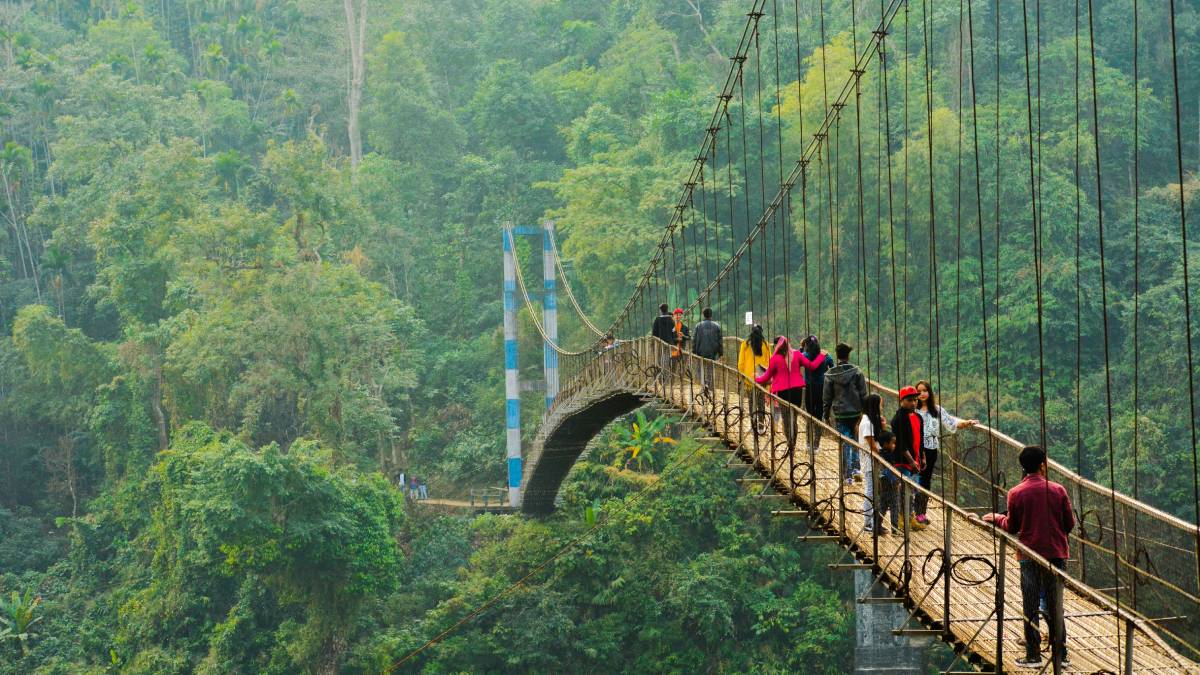
There is a specific moment in Meghalaya when you understand why you came. It may happen on the Shillong–Cherrapunji highway, when a cloud rolls across the road and the landscape disappears into mist. Meghalaya is known for dramatic waterfalls, living root bridges, clear rivers, caves, green valleys, and communities with deep connections to the land.
This guide covers ten places worth adding to a Meghalaya itinerary, along with approximate distances, the best time to visit, and practical details to help you decide what fits your trip.

What Makes Meghalaya Different from Other Hill Destinations?
Meghalaya combines landscapes with living culture. In the Khasi Hills, traditional knowledge and community practices are visible in places such as sacred groves and living root bridges. These bridges are formed by guiding the aerial roots of trees across streams and allowing them to strengthen over time. The result is not simply a scenic attraction, but an example of a long-standing relationship between people and their environment.
Rainfall also shapes the experience. Waterfalls are generally most powerful during the monsoon, while river clarity and long-distance views are often better in drier months. Choosing when to travel can therefore matter as much as choosing where to go.

10 Best Places to Visit in Meghalaya
1. Shillong
Approximate distance from Guwahati: 98 km (about 2–3 hours by road)
Shillong is the capital of Meghalaya and a natural starting point for most trips. It blends a hill-station atmosphere with a lively local music scene, markets, viewpoints, and museums. Ward’s Lake is a pleasant stop for a walk, while Elephant Falls offers a three-tiered cascade around 12 km from the city. Shillong Peak provides panoramic views when the weather is clear.
Don Bosco Museum in Mawlai is a useful stop for travellers interested in the cultures, art, history, and languages of Northeast India. Keep some flexible time in Shillong rather than treating it only as a place to sleep between excursions.
Best time: October to March for clearer weather; June to September for lush scenery, rain, and stronger waterfalls nearby.
Best for: First-time visitors, culture, museums, markets, cafés, and an easy base for day trips.
2. Cherrapunji (Sohra)
Approximate distance from Shillong: 55 km (about 2 hours by road)
Cherrapunji, also known as Sohra, is famous for its extraordinary rainfall, deep valleys, caves, and waterfalls. The surrounding landscape changes dramatically with the weather: clear days reveal far-reaching views towards the plains of Bangladesh, while monsoon clouds can fill the valleys below.
Mawsmai Cave is one of the more accessible caves in the area and is a popular stop for visitors. Sohra also makes a practical base for seeing Nohkalikai Falls, Seven Sisters Falls, and the trailhead for the Double Decker Living Root Bridge trek.
Best time: June to September for powerful waterfalls; October to March for clearer views and generally easier sightseeing conditions.
Best for: Waterfalls, caves, viewpoints, and travellers who want to explore several major attractions in one area.
3. Nohkalikai Falls
Approximate distance from Cherrapunji town: 8 km
Nohkalikai Falls is one of Meghalaya’s signature sights, with a plunge of approximately 340 metres. Water drops from a high cliff into a pool below, creating a striking contrast between the green plateau, the white cascade, and the pool’s changing colour.
The waterfall looks different across the seasons. During the monsoon, the flow is typically much stronger; in drier months, the cascade may be narrower, but visibility can be better. Check local weather and road conditions before setting out, as mist can affect the view.
Best time: June to September for a fuller waterfall; October to March for a better chance of clear views.
Travel tip: Allow extra time for weather-related delays and avoid standing near exposed edges in wet or windy conditions.

4. Seven Sisters Falls (Nohsngithiang Falls)
Location: Near the main Cherrapunji market road
Seven Sisters Falls is known for its seven parallel streams descending across a wide cliff face. At around 315 metres high and approximately 70 metres wide, it is especially impressive when monsoon rain feeds all seven cascades.
The waterfall is seasonal. From June to October, the flow is usually at its strongest; from November to May, it may be much smaller or barely visible. The main viewpoint is close to the road, so this is a convenient stop for travellers who do not want a long trek.
Best time: June to September, with conditions varying according to rainfall.
Travel tip: If you visit during the monsoon, carry rain protection and allow for reduced visibility.

5. Double Decker Living Root Bridge, Nongriat
Location: Nongriat village, near Cherrapunji
Trek: Around 3,500 steps from Tyrna; allow approximately 4–6 hours for the round trip, depending on fitness, weather, and time spent at the bridge.
The Double Decker Living Root Bridge is one of Meghalaya’s most distinctive experiences. Khasi communities have guided the aerial roots of rubber fig trees across the river and allowed them to grow and interlock, forming a living bridge. The double-decker structure has two levels of roots and demonstrates generations of local knowledge.
Reaching the bridge involves a steep descent and a demanding climb back up. Steps can be wet and slippery, so sturdy footwear with good grip is essential. Carry drinking water, snacks, and a small bag, and start early enough to complete the return trek in daylight.
Best for: Hikers, nature lovers, and travellers interested in traditional engineering and local culture.
Important: This trek is not suitable for everyone. Consider your fitness, knee health, weather conditions, and the time available before committing. Do not assume that the descent will be easy simply because it is downhill.

6. Dawki and Shnongpdeng (Umngot River)
Approximate distance from Shillong: 95 km (about 2.5–3 hours by road)
Dawki is known for the Umngot River, whose clear water can make boats appear to float above the riverbed. The famous transparent-water effect is most often seen in the drier months, when less monsoon runoff carries silt into the river.
Shnongpdeng, a short distance upstream, is popular for riverside camping and activities such as kayaking and rafting when conditions permit. Staying overnight can give you more time to enjoy the river without rushing back to Shillong on the same day.
Best time: October to March is generally better for clearer water; monsoon conditions can reduce visibility and affect water activities.
Travel tip: Confirm activity availability, safety arrangements, and river conditions locally. Do not enter the water unless local operators or authorities confirm it is safe.
7. Mawlynnong
Approximate distance from Shillong: 90 km (about 2.5 hours); Dawki is around 12 km away.
Mawlynnong became widely known after receiving the title “Asia’s Cleanest Village” from Discover India magazine in 2003. Its appeal lies in community-led cleanliness practices, village paths, greenery, and a quieter pace of life.
A bamboo skywalk offers views over the surrounding landscape, and the nearby single living root bridge at Riwai is a more accessible alternative for visitors who cannot manage the longer Nongriat trek. The bridge is reached by a short walk, although the path may still be uneven or slippery.
Best for: Village walks, cultural experiences, photography, and a relaxed stop between Shillong and Dawki.
Travel tip: Respect residents’ privacy, follow local guidance, and use the bins provided. Mawlynnong is a living community, not just a sightseeing stop.

8. Laitlum Canyon
Approximate distance from Shillong: 25 km (about 45 minutes by road, depending on conditions)
Laitlum Canyon offers sweeping views across steep green slopes and the valleys below. Its name is often interpreted as “end of the hills.” Unlike the Nongriat trek, reaching the main viewpoint generally involves only a short walk from the road.
In the monsoon, clouds may gather below the rim and create a dramatic view. In clearer weather, the canyon’s contours and distant plains are easier to see. Because conditions can change quickly, it is worth keeping your schedule flexible.
Best time: July to September for cloud-filled scenery; October to March for a better chance of clearer views.
Travel tip: Wear shoes with good grip and stay away from unprotected cliff edges, particularly in fog or rain.

9. Krang Suri Waterfall
Approximate distance from Shillong: 160 km (about 4–5 hours by road), in the Jaintia Hills region
Krang Suri is known for its turquoise pool, white cascade, and forested surroundings. The limestone landscape contributes to the water’s distinctive colour, although the appearance and clarity can vary with rainfall and light.
The longer drive makes Krang Suri less convenient than the waterfalls around Sohra, but it can be rewarding for travellers with extra time. The nearby Nartiang Monoliths can also be considered as part of a Jaintia Hills day, provided the driving schedule allows enough time.
Best time: October to March is often favourable for clearer water and more settled conditions, though the experience depends on recent rainfall.
Travel tip: Check current entry rules and swimming conditions before visiting. Only swim where it is expressly permitted and follow local safety instructions.

10. Mawsynram
Approximate distance from Shillong: 65 km (about 2 hours by road)
Mawsynram is internationally known for its exceptionally high average annual rainfall. A visit here is less about a single landmark and more about understanding how people live in a landscape shaped by rain, mist, and lush vegetation.
Mawjymbuin Cave, near the village, is another point of interest. The cave contains a stalagmite formation regarded as sacred by members of the local Khasi community. Visitors should approach religious and cultural sites respectfully and follow local guidance.
Best time: June to September for the full monsoon atmosphere; outside the monsoon, it can be a quieter half-day visit.
Travel tip: Do not plan the day around guaranteed viewpoints. Rain and cloud cover can change visibility quickly, so keep alternative stops in mind.
Which Meghalaya Places Should You Prioritise?
If you have limited time, choose places based on the experience you want rather than trying to cover every stop. This quick comparison can help you build a realistic itinerary.
| Place | Best known for | Suggested time | Effort level |
|---|---|---|---|
| Shillong | City sights, culture, markets | 1–2 days | Easy |
| Cherrapunji / Sohra | Waterfalls, caves, viewpoints | 1–2 days | Easy to moderate |
| Nohkalikai Falls | High plunge waterfall and viewpoint | 1–2 hours | Easy, subject to weather |
| Seven Sisters Falls | Wide seasonal waterfall | 30–60 minutes | Easy |
| Double Decker Living Root Bridge | Living root bridge and forest trek | 4–6 hours or more | Strenuous |
| Dawki and Shnongpdeng | River views, kayaking, camping | Half to full day; overnight optional | Easy to moderate |
| Mawlynnong | Village walk and Riwai root bridge | 2–3 hours | Easy |
| Laitlum Canyon | Panoramic valley views | 1–2 hours | Easy to moderate, weather dependent |
| Krang Suri Waterfall | Turquoise pool and waterfall | Half day or longer with driving | Moderate |
| Mawsynram | Rainfall landscape and Mawjymbuin Cave | Half day | Easy to moderate |
Times are planning estimates, not fixed schedules. Road conditions, rainfall, queues, walking speed, and local access rules can change how long each stop takes.
How to Plan a 7-Day Meghalaya Itinerary
A seven-day trip gives you time to explore the main destinations without rushing every stop. The route below is a suggested sequence from Guwahati; adjust it to your arrival time, weather, and transport arrangements.
- Day 1 – Guwahati to Shillong: Arrive in Guwahati, travel to Shillong, and spend the evening around Ward’s Lake or Police Bazaar.
- Day 2 – Shillong: Visit Don Bosco Museum, Elephant Falls, and Shillong Peak if weather and access allow.
- Day 3 – Laitlum and Jaintia Hills: Visit Laitlum Canyon and travel towards Krang Suri. This is a long driving day, so avoid overloading the schedule.
- Day 4 – Mawlynnong, Dawki, and Shnongpdeng: Explore Mawlynnong and the Riwai living root bridge, then continue to Dawki and Shnongpdeng. Stay overnight by the river if you want a slower experience.
- Day 5 – Cherrapunji / Sohra: Travel to Sohra and visit Nohkalikai Falls, Seven Sisters Falls, and Mawsmai Cave, depending on weather and opening times.
- Day 6 – Nongriat trek: Start early for the Double Decker Living Root Bridge trek. Keep this day focused on the trek rather than adding several distant attractions.
- Day 7 – Mawsynram and departure: If your departure time allows, visit Mawsynram before returning to Guwahati. For an early flight or train, stay closer to Guwahati the previous night instead.
Have only five days? Prioritise Shillong, Sohra’s main waterfalls and caves, Mawlynnong, and Dawki. Add the Nongriat trek only if you can give it a full day and are comfortable with steep steps. Krang Suri and Mawsynram may need to be skipped to keep the route manageable.

Can You Combine Meghalaya with Kaziranga?
Yes. Travellers arriving through Guwahati can combine Meghalaya with Kaziranga National Park in Assam, but the two destinations need additional travel time. A trip of around 9–11 days can provide a more comfortable schedule for both. Consider visiting Kaziranga first if you want to plan around early-morning safaris, then continue to Meghalaya. Confirm safari availability and current park rules before finalising dates.
Practical Travel Information for Meghalaya
How to Reach Meghalaya
For most travellers, Guwahati in Assam is the most practical air and rail gateway. From Guwahati, Shillong is approximately 98 km away and usually takes around 2–3 hours by road, depending on traffic and weather. You can arrange a private taxi or use shared transport where available. Plan extra time during heavy rain, holidays, and peak travel periods.

Permits and Local Requirements
Indian travellers generally do not need a special permit for the main Meghalaya tourist circuit described in this guide. Requirements can change for particular locations or activities, so verify current official guidance before travel. Foreign nationals should check any applicable requirements, especially for locations near the international border.
Estimated Daily Budget
Your total cost depends on group size, transport, accommodation, activities, and season. The following are broad starting estimates from the source article, not live prices; verify current rates before booking.
- Budget travel: approximately ₹600–₹800 per person per day when using shared transport, basic homestays, and economical meals.
- Mid-range travel: approximately ₹2,000–₹3,000 per person per day with a private vehicle, guesthouses, and restaurant meals.
- Extra costs: activities, entry fees, guides, camping, and special transport can increase the total. The Nongriat trek and Shnongpdeng camping may involve separate charges.
These estimates can be too low for some travel styles, particularly when a private vehicle is shared by only one or two people. Request an itemised quote and confirm what is included before booking.
What to Pack
- A waterproof jacket or raincoat and a protective cover for your day bag.
- Comfortable shoes with good grip; trekking shoes are strongly recommended for Nongriat.
- Quick-drying clothes, spare socks, and a light warm layer for cool or misty conditions.
- Reusable water bottle, snacks, basic personal medication, and a small first-aid kit.
- Offline maps and a charged phone or power bank, especially for longer drives and hikes.
- Cash for small local purchases where digital payments may not be available.
Best Time to Visit Meghalaya
There is no single best month for every Meghalaya attraction. June to September usually brings the strongest waterfalls and lush monsoon scenery, but also heavier rain, slippery trails, and lower visibility. October to March is often better for clearer river water around Dawki and more reliable long-distance views, although individual conditions still vary. Choose your dates according to your priorities and check the forecast shortly before travelling.
Responsible Travel Tips
- Carry your rubbish back and use designated bins, especially in villages and near rivers.
- Ask permission before photographing residents, homes, or community ceremonies.
- Respect sacred groves, caves, local customs, and any posted restrictions.
- Use local guides where appropriate and follow instructions at waterfalls, riverbanks, and cliff viewpoints.
- Do not rely on a fixed itinerary during severe rain; be willing to change plans for safety.
Plan Your Meghalaya Trip with The Travel Story
Meghalaya is easier to enjoy when the route, driving time, accommodation, and weather-dependent activities are planned realistically. If you prefer a group trip rather than coordinating every transfer yourself, explore The Travel Story and review the current Meghalaya trip details, dates, inclusions, and itinerary before booking.
Final Thoughts
The best places to visit in Meghalaya offer different experiences: Shillong brings culture and city life, Sohra delivers waterfalls and caves, Nongriat rewards hikers with a remarkable living root bridge, and Dawki and Shnongpdeng offer time beside a striking river. Mawlynnong, Laitlum Canyon, Krang Suri, and Mawsynram add quieter village experiences, dramatic views, and landscapes shaped by rainfall.
Rather than trying to see everything in a hurry, build your itinerary around the season, road distances, and the activities you care about most. With five to seven days and a little flexibility for the weather, you can experience many of Meghalaya’s defining landscapes at a comfortable pace.