Every serious biker planning a Himalayan trip eventually sits with the same question: Spiti or Ladakh? Both involve high passes, cold deserts, and the kind of roads that demand full attention. Both deliver landscapes that are genuinely difficult to describe to anyone who hasn’t been. And both carry a reputation that has grown considerably over the last decade as more riders make the journey each year.
That last point is where the comparison starts to diverge. Ladakh has had a long enough spotlight for the economics of mass tourism to reshape significant parts of the experience. Spiti is catching up in search volume but remains structurally different in ways that matter to riders who care about more than ticking a pass. This guide breaks down what that difference actually looks like on the ground in 2026 whether it’s about the terrain, people, cost, support, or the routes that don’t appear in the standard comparison articles.
For riders who want a structured, supported route through either destination, The Travel Story’s Spiti Biking Expedition covers the full Spiti circuit across 6 nights and 7 days, starting from ₹19,999 with the inclusions of a Marshall, Backup Vehicle and a Trip Captain. For riders leaning toward Ladakh, The Travel Story’s Leh Ladakh Full Circuit covers the complete Ladakh biking circuit with guided support.

What Spiti vs Ladakh Biking Actually Means in 2026
The short answer: Ladakh offers more route variety, better infrastructure, and higher-altitude passes. Spiti offers rawer terrain, more authentic local culture, higher interaction with actual residents, and a circuit that changes character dramatically as it unfolds but for a rider who has already done Ladakh and wants something less mediated, Spiti is the natural next destination — though several experienced riders report they now choose Spiti first specifically to avoid Ladakh’s commercial trajectory.

The People: Where Spiti and Ladakh Have Diverged Most Sharply
This is the comparison that no distance table or altitude chart captures, but it’s the one that riders who have done both routes talk about most consistently.
In Ladakh, the explosion in tourist volume over the last decade has fundamentally changed the economic fabric of the guesthouses and camps along the circuit. Many guesthouses in Leh and around Pangong Tso, Nubra Valley, and the main tourist corridors are now managed by people from other states — not locals. The hospitality is professional. It is not personal. The interaction most riders have with a “Ladakhi guesthouse” is transactional by design, indistinguishable in texture from a budget hotel in any hill station.
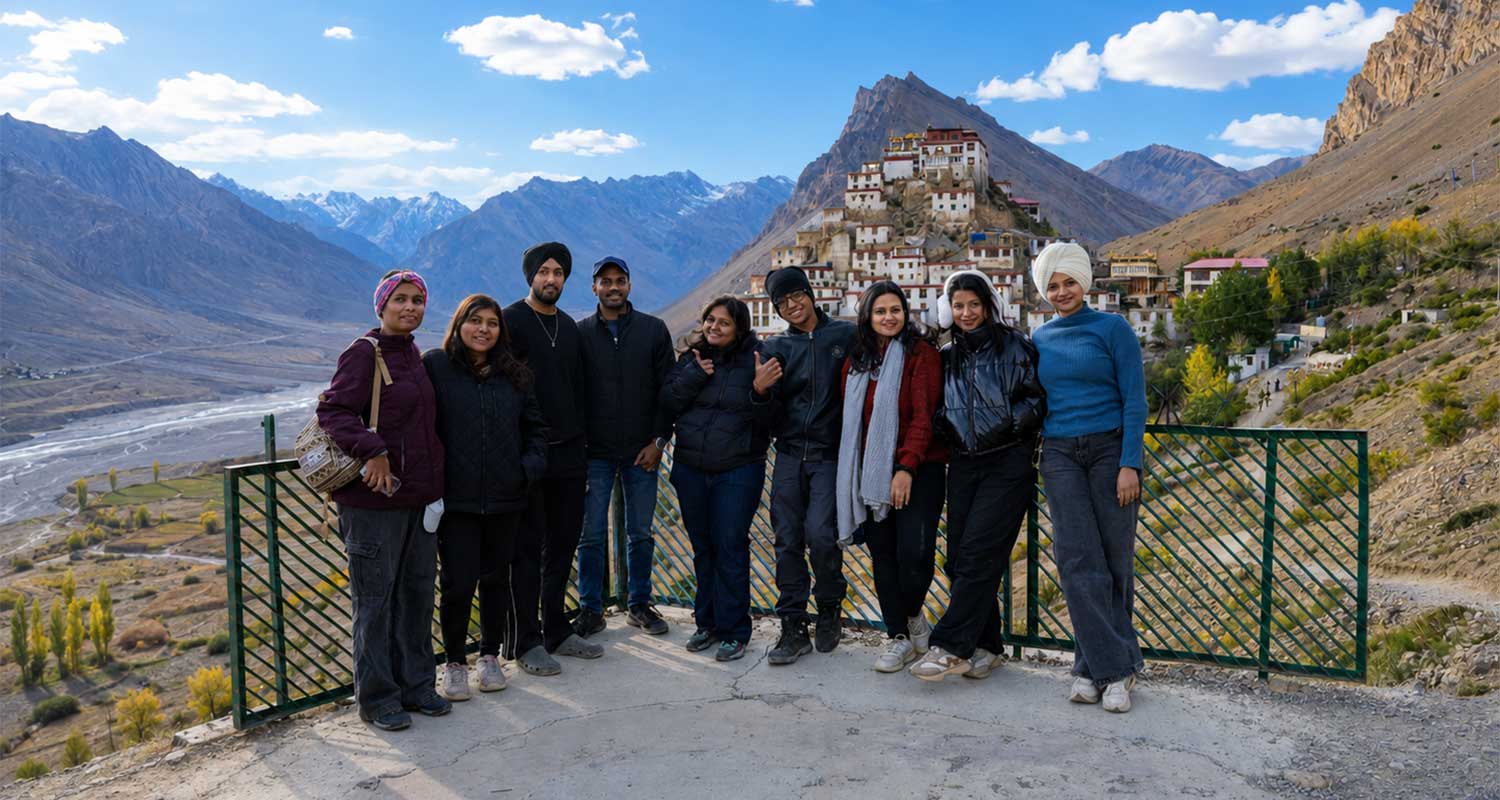
In Spiti, this shift has not happened at the same scale. The villages along the circuit — Nako, Tabo, Kaza, Kibber, Langza, Losar, Hikkim — are still run by the families who built them. A rider who pulls into a homestay in Langza is likely to end up having butter tea in the family’s kitchen, talking about the last winter’s snowfall or the monastery festival scheduled for the following month. This is not a curated experience offered as a product. It happens because the hosts are farmers and monks who happen to take guests, not hospitality workers operating a business.
The interaction gap between the two destinations is significant enough that experienced riders who have completed both circuits regularly cite it as the primary differentiator. Spiti’s villages have not been rewired for tourist consumption yet. The people who live there are the people you talk to — and that distinction is becoming rarer across the Himalayas with every passing season.

Terrain: What Each Route Actually Demands From a Rider
Ladakh: The main circuits — Manali-Leh highway, Srinagar-Leh, and the standard Pangong-Nubra-Khardung La loop — are increasingly well-paved. Khardung La (5,359 m), once famous for its rough surface, now has tarmac to the summit and a food stall at the top. The BRO has progressively improved most main-route surfaces. This makes Ladakh significantly more accessible than it was five years ago, which is both its strength for newer riders and its weakness for those seeking technical challenge.
Spiti: The Spiti circuit is structurally more demanding, and by design. The Manali approach still requires navigating the Gramphu-Batal stretch — unpaved, with multiple water crossings where the depth increases as the day goes on because snowmelt feeds the streams through the afternoon. A crossing that is manageable at 8 AM can be genuinely risky by 2 PM. The Shimla-Kinnaur or Manali-Jibhi-Kinnaur approach is better, but narrows and roughens past Nako as the valley opens into the cold desert.
The Losar-Chandratal-Koksar Route: Spiti’s Real Test
This is the stretch that separates Spiti biking from every other Himalayan circuit. After Losar, the last village in Spiti before the Kunzum Pass — the route toward Chandratal and onward to Koksar through Gramphoo is completely unpaved. No tar. No defined lanes. Tracks through loose gravel, river crossings, and open terrain where the “road” is a line that previous vehicles have worn into the hillside.
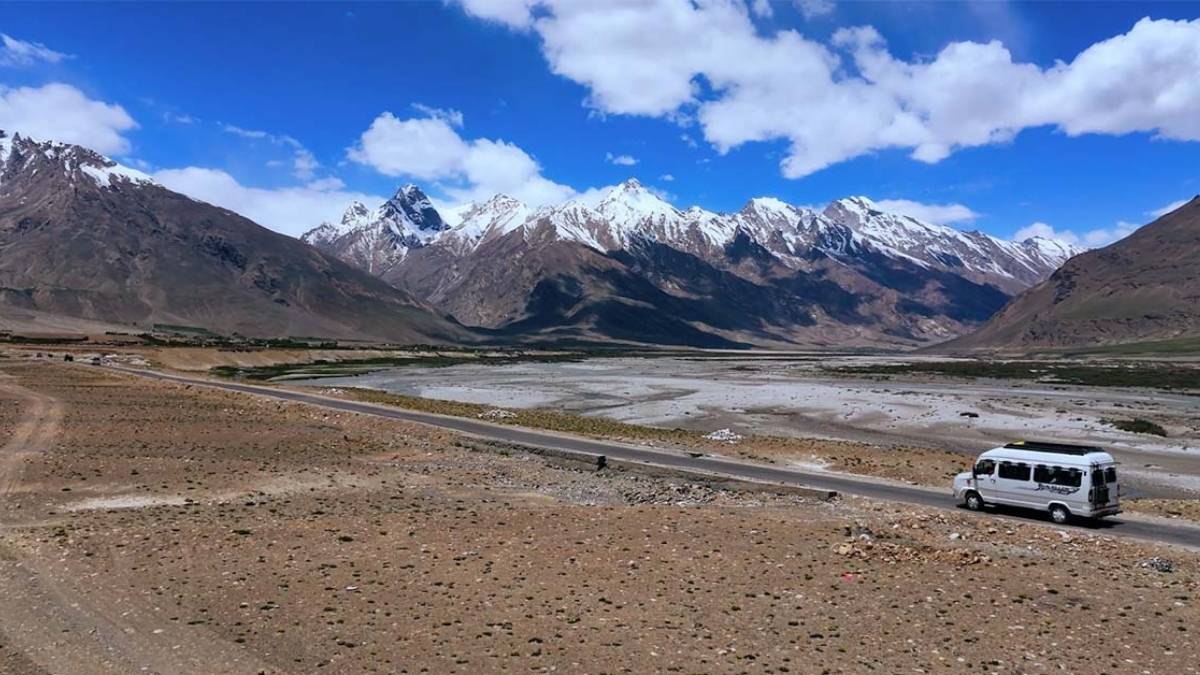
The landscape through this section changes in a way that no single other circuit in the Indian Himalayas matches. From Losar, riders cross through high-altitude plateau terrain, descend toward the Chandratal catchment, climb again toward Kunzum, and emerge at Koksar into the Lahaul Valley — the terrain shifting from cold desert to glacial rock to green valley floor across a single day’s riding. At Chandratal itself (4,300 m), the lake is a crescent of water at an altitude where the light bends differently and the silence is measurable.
The Koksar approach adds river-crossing technical riding that most Ladakh routes simply don’t offer in the same concentration. Riders who specifically seek offroad capability — those running adventure-oriented machines with proper ground clearance — cite this stretch as the reason Spiti biking is categorically different from the Ladakh experience in 2026.

Cost and Accommodation: The Practical Gap
Spiti is consistently less expensive than an equivalent Ladakh trip, with the cost difference concentrated in two areas:
Accommodation: Homestays in Spiti villages — Nako, Langza, Komic, Hikkim, Losar — typically run ₹800–1,500 per night per person including meals. This is not budget accommodation with poor service; it is genuinely local hospitality that happens to be inexpensive because the people providing it are not running a commercial operation. Equivalent stays in Leh or around Pangong run ₹1,500–2,500 per night per person for much more standardised, less personal accommodation.
Transport distance: A complete Spiti circuit covers roughly 1,600 km. A comparable Ladakh circuit (Manali-Leh-Pangong-Nubra-Leh) runs 2,000 km or more. Fuel is the largest single cost on either trip — and that 400 km difference is meaningful when multiplied across a group.
The total per-person cost for a 9-day Spiti trip typically runs ₹19,000–42,000 depending on group size and accommodation choices. Equivalent Ladakh trips run ₹25,000–55,000 for the same level of accommodation and group size.

Mechanic Support and Safety Infrastructure: Ladakh Wins Clearly
This is the one category where Ladakh has an unambiguous advantage for riders, particularly those on older machines or doing their first Himalayan ride.
Ladakh: Leh has multiple motorcycle workshops with parts for Royal Enfield, Hero, KTM, and most common Indian bikes. A breakdown between Leh and Pangong is inconvenient; it is not a crisis.
Spiti: Kaza does not have many mechanics at work. Between Kaza and Manali (approximately 200 km of rough road), there is effectively no formal mechanical support. A breakdown on the Gramphu-Batal stretch or on the Losar-Koksar offroad route means solving the problem yourself or waiting for another rider to pass. This reality means that pre-trip bike preparation like chain tension, tyre condition, brake pads, fuel capacity is not optional in Spiti the way it sometimes gets treated in Ladakh where help is an hour away.
For riders on newer, well-maintained machines with basic mechanical competence, this is manageable. For those who are less confident in roadside repairs, it is the strongest argument for starting with Ladakh.

Photography and Landscape Diversity
Both circuits produce extraordinary photography. The character of what each produces is different.
Ladakh: Iconic. Pangong Tso’s blue against brown mountains, the sand dunes of Nubra, Khardung La’s prayer-flag summit. These images are globally recognised — which also means every shot replicates something already extensively photographed.
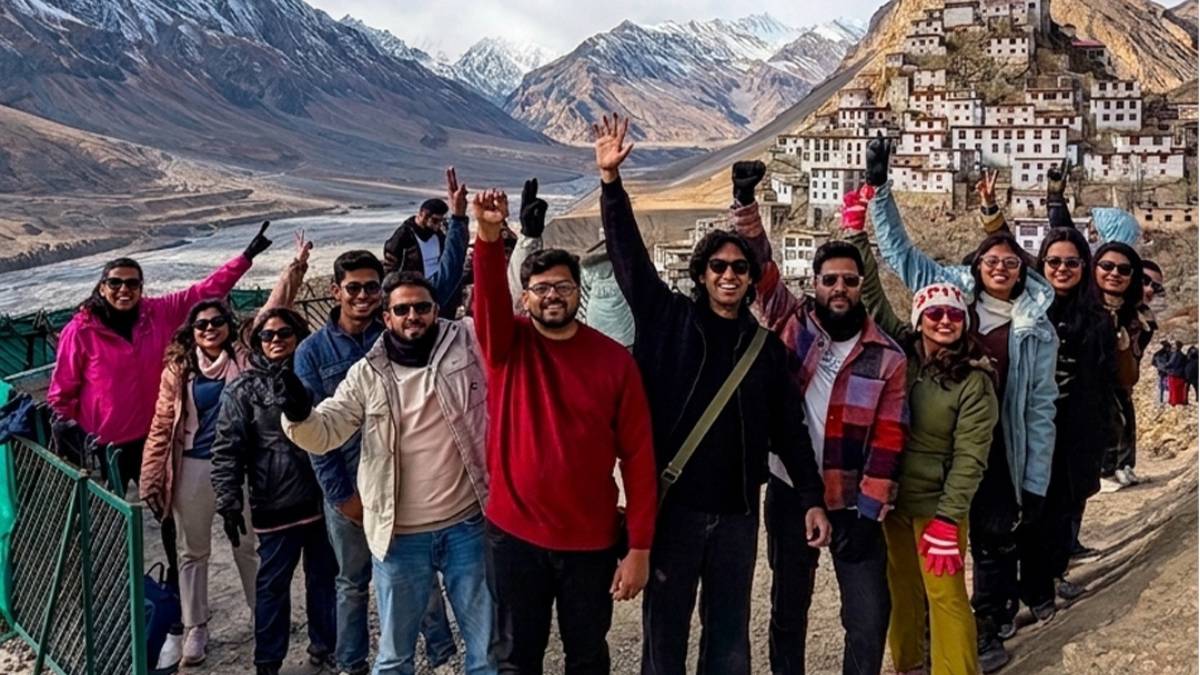
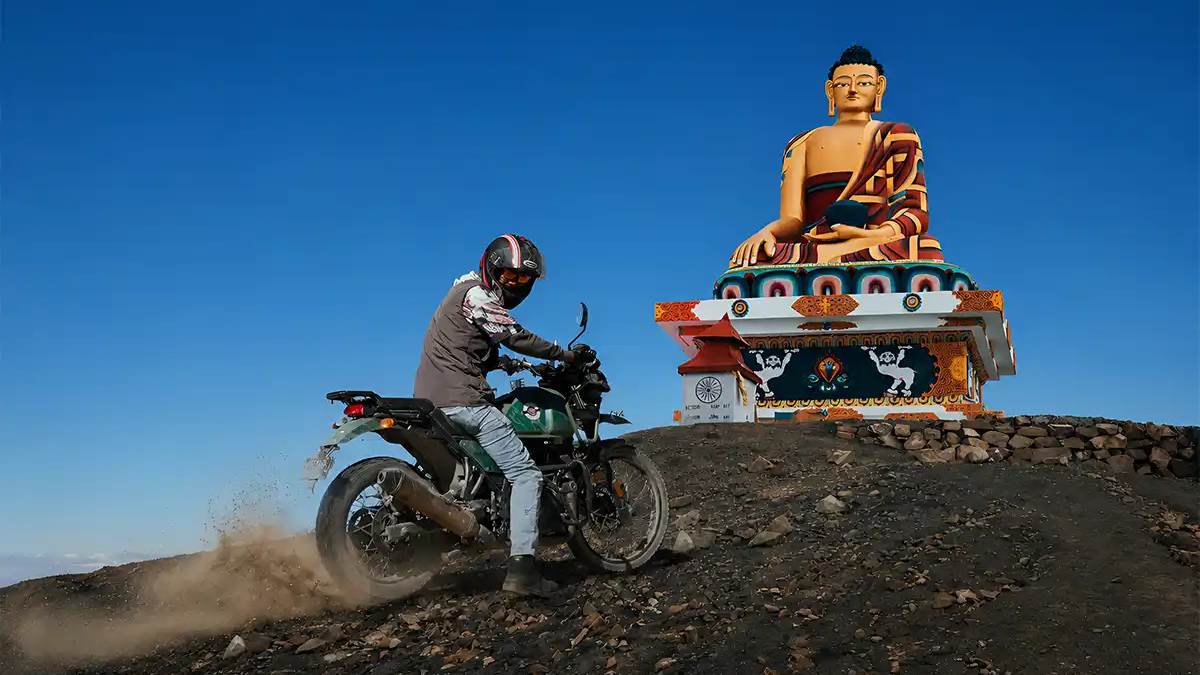
Spiti: More varied throughout a single circuit, and less replicated. The landscape transitions from the green valley floors of Kinnaur through the narrow gorges of Nako and the ancient cave monasteries of Tabo, to the cold desert plateau around Kaza, to the glacial terrain of the Losar-Chandratal stretch. The shadow-and-light contrast across the barren mountains around Kaza in September — when clouds move fast and the contrast shifts between shots — produces images that look nothing like standard Himalayan photography. Key Monastery perched on its hill at 4,166 m, Hikkim’s tiny post office against a vast empty sky, the solo Buddha statue at Langza at 14,500 ft — none of these appear in the global visual vocabulary of Himalayan tourism yet.

Crowd Levels in 2026: A Widening Gap
Ladakh received over 3.5 lakh tourists in the 2023 season according to state tourism data, with numbers continuing upward. Pangong Tso’s shoreline during peak season (July-August) now has a line of camping operations that has more in common with Manali’s tourist belt than with a remote Himalayan lake. The solitude that drew riders to Ladakh in the first place is genuinely difficult to find on the standard circuit.
Spiti is growing — the crowd data in June 2026 at Chandratal (an estimated 3,500 vehicles in a single week after the route opened in 2026) signals that the trajectory is real. But the valley’s structural constraints — two high passes, a short season, no airport, no large hotel inventory — mean that scale is self-limiting in a way that Ladakh’s infrastructure has outgrown.
In practical terms: a September week in Spiti still delivers the kind of riding where you can stop in the middle of a dirt road, cut the engine, and not hear another vehicle for minutes. That experience has effectively left Ladakh’s main circuits.

Duration: How Much Time Each Trip Needs
| Factor | Spiti | Ladakh |
|---|---|---|
| Minimum days (single route) | 7 days | 10 days |
| Full circuit (both routes) | 9–12 days | 12–15 days |
| Driving days | 7–8 | 9–11 |
| Acclimatisation days needed | 1–2 in Kaza | 1–2 in Leh |
| Starting city (typical) | Delhi or Chandigarh | Delhi, Chandigarh, or fly to Leh |
Spiti’s shorter circuit makes it more accessible for riders with 9–10 days available. Ladakh genuinely benefits from 12+ days to avoid feeling rushed between its main destinations.

Who Should Choose Which Route
Choose Spiti if:
- You want real interaction with local people, not tourist-facing hospitality
- Technical offroad riding on the Losar-Chandratal-Koksar route is specifically what you’re after
- You have 8–10 days and want a complete circuit without backtracking
- You have done Ladakh already and want something less commercial
- Your budget is tighter — Spiti costs 20–30% less for an equivalent trip
Choose Ladakh if:
- This is your first Himalayan bike trip and you want better infrastructure support
- Your bike has mechanical vulnerabilities and workshop access matters
- You have a specific pass on your list (Khardung La, Umling La) that Spiti doesn’t cover
- You have 12+ days and want the full Pangong-Nubra circuit
- You are travelling with a mixed group where some riders want easier road access to the main sights
The honest answer for most experienced riders in 2026: Do Spiti first, then Ladakh. The trajectory of Ladakh’s commercialisation is one-directional, and Spiti’s window of raw authenticity — the local families, the offroad terrain, the empty September roads — is finite.
For riders planning the Spiti circuit this season, The Travel Story’s Spiti Biking Expedition runs 6N-7D batches from June through September with backup vehicle, medical support, and trip captains who have ridden the route multiple seasons. For those choosing the Ladakh route, The Travel Story’s Leh Ladakh Full Circuit covers the complete biking circuit with the same guided support structure.

Frequently Asked Question: Spiti vs Ladakh Biking
1. Which is better for biking — Spiti Valley or Ladakh? Both offer exceptional biking, but they deliver different experiences. Ladakh has better infrastructure, more route variety, and higher passes (Khardung La at 5,359 m, Umling La at 5,883 m). Spiti has rawer terrain, more authentic local culture, completely offroad stretches like the Losar-Chandratal-Koksar route, and significantly less commercialisation in 2026. Experienced riders with a choice between the two increasingly choose Spiti for the authenticity; first-time Himalayan riders typically do better starting with Ladakh.
2. Is Spiti Valley more difficult to ride than Ladakh? Yes, for the most part. The Gramphu-Batal stretch into Spiti involves multiple water crossings; the Losar-Chandratal-Koksar route is completely unpaved. Ladakh’s main circuits have been progressively paved, including the approach to Khardung La. Spiti demands higher mechanical self-sufficiency since Kaza has only one mechanic and no support exists on the Chandratal offroad stretch.
3. Which is cheaper — Spiti or Ladakh biking? Spiti is consistently 20–30% cheaper. Key reasons: shorter circuit distance (1,600 km vs 2,000+ km for Ladakh), lower accommodation costs (homestays in Spiti villages at ₹500–1,200/night vs ₹1,500–3,500 around Pangong), and no flight required (Ladakh trips often involve flying into Leh, adding ₹8,000–15,000 each way).
4. Is Ladakh becoming too commercial for bikers? Many guesthouses on Ladakh’s main tourist corridors are now managed by people from outside the region, particularly around Leh, Pangong Tso, and Nubra Valley. The local interaction that drew early Ladakh riders has diminished on the standard circuit. Less-travelled sub-routes (Tso Moriri, Hanle, Zanskar approach) retain more of the original character, but require additional days.
5. What is the Losar-Chandratal-Koksar route in Spiti? This is the fully offroad stretch connecting Losar village (the last settlement in Spiti before Kunzum Pass) through the Chandratal Lake area and onward to Koksar in Lahaul. The surface is unpaved throughout — loose gravel, river crossings, and open mountain track. It is one of the most technically demanding sections of any Himalayan motorcycle circuit and offers a landscape transition from cold desert to glacial terrain to Lahaul valley floor across a single day’s riding.
6. When is the best time for Spiti biking vs Ladakh biking? September is optimal for both destinations — clearest skies, most stable road conditions, and noticeably lower crowd levels than July-August. Both destinations have access routes that are closed October through May. Ladakh has the Leh airport as an alternative access point; Spiti has no air access and is entirely road-dependent.
7. How does crowd density compare between Spiti and Ladakh in peak season? Ladakh significantly busier. Pangong Tso and Nubra Valley at peak season resemble busy tourist zones. Spiti’s Chandratal has seen growing pressure — an estimated 3,500 vehicles arrived in a single week in June 2026 — but the valley overall remains considerably less trafficked than Ladakh’s main circuit. September in Spiti still offers riding conditions where empty roads are the norm rather than the exception.
8. Can the same bike be used for both Spiti and Ladakh? Yes, with appropriate ground clearance. Royal Enfield Himalayan (411 and 450), BMW G310GS, and similar adventure bikes handle both routes well. Fully-faired sports bikes are not suitable for either destination’s offroad sections. For the Spiti Losar-Chandratal-Koksar stretch specifically, tyre condition and ground clearance matter more than engine size.

Salman Hashmi is a travel industry expert, group travel leader, and destination specialist with over 3 years of hands-on experience in travel operations, trip management, and destination planning across India now working as a Marketing Executive. His expertise extends beyond leading trips on the ground to managing the critical backend logistics that ensure seamless travel experiences, including itinerary planning, vendor coordination, traveler support, and operational execution.
Over the years, Salman has successfully organized and led group tours to destinations such as Spiti, Kashmir, Tirthan-Jibhi, Jaisalmer, Shangarh, Chopta-Tungnath, Auli, Chakrata, Badrinath, Valley of Flowers, Udaipur, Harsil Valley, and many more. His extensive field experience provides deep insights into local cultures, regional traditions, historical landmarks, and destination-specific travel experiences. Through continuous exploration and interaction with local communities, he has developed a strong understanding of India’s diverse history, heritage, and cultural landscapes.
In the past, Salman has collaborated with and hosted well-known content creators including Richi Shah, TheMaahie, and Trahuller, while managing travel experiences for more than 700 travellers. His combination of on-ground leadership, operational expertise, destination knowledge, and understanding of local history and culture enables him to create trustworthy, experience-driven travel content that helps readers make informed travel decisions with confidence.