Best Month to Visit Leh and Ladakh: What Nobody Tells You About Each Season

What is the best month to visit Leh and Ladakh? June and September are the most reliable months — both routes are open, skies are clear, and crowds are manageable. July and August are Ladakh’s monsoon months on paper but receive as little as 15 mm of total rainfall due to the Himalayan rain shadow — making them the best kept secret for fewer crowds and warm days. January and February suit Chadar Trek and snow leopard seekers only.

Every travel guide on the internet confidently tells you to visit Leh and Ladakh between June and September. That’s not wrong — but it’s also incomplete enough to lead to poor decisions. It treats summer as one uniform block, ignores the genuine case for visiting in July and August, gives winter either a sentence or a paragraph, and fails to account for the fact that “best” depends entirely on what someone specifically wants from the trip.

The honest truth: there is no single best month to visit Leh and Ladakh. There is a best month for each type of traveler, each type of experience, and each budget — and several of those months are ones that most guides dismiss without proper reasoning. Ladakh is a cold, high-altitude desert that sits behind the greatest natural rain barrier on earth. Understanding why that changes the monsoon calculus entirely is the starting point for making a genuinely informed decision.

For travelers considering a structured circuit through Leh and Ladakh, The Travel Story’s Leh Ladakh Tour Packages runs supported batches through the season with logistics handled from day one.

Aerial view of Pangong Lake's deep blue water meeting barren brown Ladakh mountains under a partly cloudy sky

The Science Behind Ladakh’s Weather — and Why It Matters

Before the month-by-month breakdown, one fact fundamentally changes the way Ladakh’s seasons should be understood: Ladakh receives approximately 100 mm of total precipitation per year. For context, Mumbai receives that much in a single monsoon afternoon.

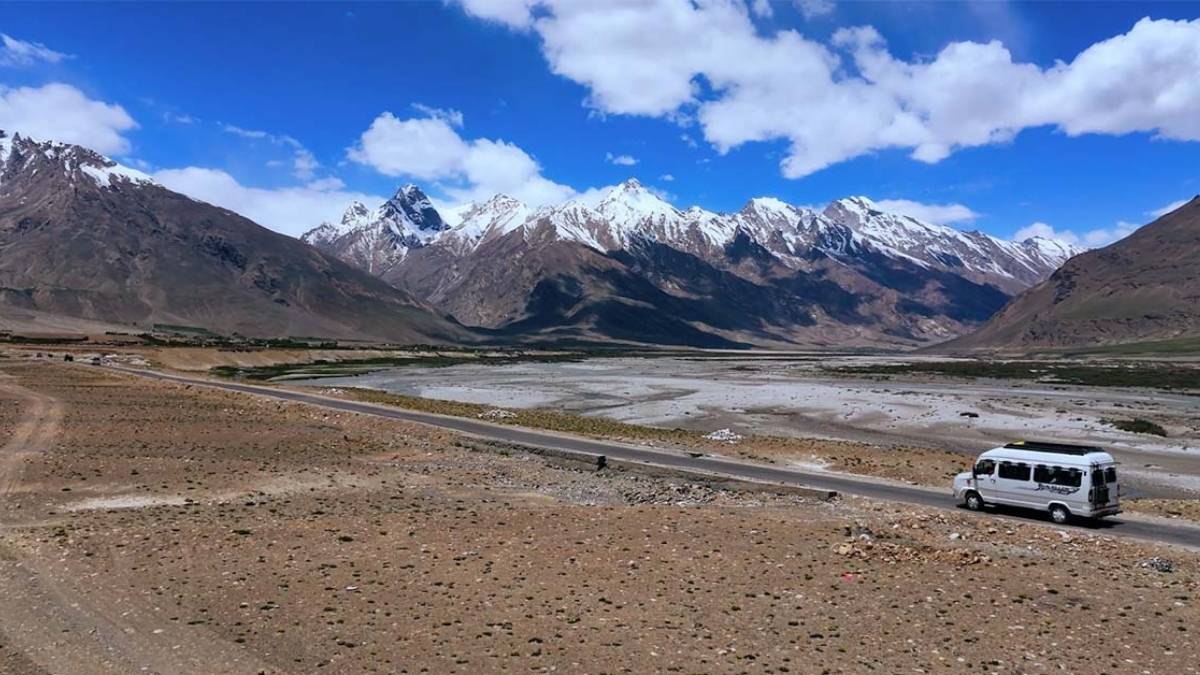
The reason is geological. The Great Himalayan Range blocks the monsoon clouds coming from the Indian plains, creating a rain shadow effect over Ladakh. The clouds exhaust their moisture on the southern slopes of the Himalayas and arrive in Ladakh’s cold desert essentially dry. Ladakh is a high-altitude cold desert in the rain shadow of the Himalayas with approximately 300 days of sunshine and only 100 millimetres of precipitation annually.

This is the foundational fact that most “avoid monsoon” travel advice ignores. The monsoon isn’t hitting Ladakh — it’s hitting the roads into Ladakh. Those are two very different problems, with two very different solutions.

Group of tourists on a camel safari at Hunder sand dunes, Nubra Valley, with the Karakoram range behind them

Month-by-Month Guide: What Leh and Ladakh Actually Look Like

MonthTemp (Day/Night)RainfallCrowdsRoadsBest For
January-3°C / -20°C< 5 mmVery fewManali-Leh closed; fly onlyChadar Trek, snow leopard sightings
February-2°C / -18°C< 5 mmVery fewFly onlyChadar Trek, frozen landscapes
March5°C / -12°C< 5 mmLowOpening slowlyShoulder season, low cost, quieter Leh
April12°C / -5°C< 10 mmLow–MediumOpening; Manali-Leh usually closedEarly season, festivals, Leh basecamp
May18°C / 2°C< 10 mmMediumManali-Leh opens late MayPre-peak, good passes, building crowds
June24°C / 8°C< 10 mmHighBoth routes fully openPeak access, full circuit, all passes open
July28°C / 12°C~15 mmLower than JuneBoth open; approach roads riskyFewer crowds, warm days, affordable
August27°C / 11°C~15 mmLower than JuneBoth open; approach roads riskyFewer crowds, clear skies in valley, affordable
September20°C / 5°C< 10 mmMediumBoth routes openBest overall — clear skies, stable roads
October12°C / -5°C< 5 mmLowClosing; Manali-Leh riskAutumn colours, empty roads, crisp air
November0°C / -15°C< 5 mmVery fewManali-Leh closedOff-season, Leh city exploration only
December-5°C / -20°C< 5 mmVery fewFly onlyDeep winter, Leh at its most local

Why July and August in Ladakh Are Better Than Most Guides Admit

This is the argument that the standard “best time to visit Ladakh” content consistently gets wrong — and the reason is simple: most writers conflate the monsoon experience in the rest of India with what happens inside Ladakh’s cold desert.

Ladakh Is a Cold Desert — The Monsoon Barely Touches It

Even though the months from July to September are considered to be the monsoon season in Ladakh, it receives extremely less rainfall, as it is located in a high altitude and rain shadow area.

The specific numbers tell the story better than any description. Leh receives approximately 15 mm of rainfall during July — places that get less rain in two months than Mumbai gets on a single July afternoon. In most years, in 2012 and 2020, Leh received just 0.2 mm and 0.4 mm of rain respectively in July. These are not rounding errors — they reflect years when Leh received effectively zero monsoon rainfall.

Most of the time during monsoon, the skies are clear, the weather is pleasant and it’s a great time for sightseeing, adventure and other activities that Ladakh is famous for.

Bar chart comparing average July rainfall in Mumbai (800mm), Delhi (210mm), and Leh, Ladakh (15mm), illustrating Ladakh's rain shadow effect

The Real Risk Is the Roads In — Not the Destination

This is the nuance most planning guides miss. While Ladakh stays dry, the approach roads — Manali to Keylong on the Manali-Leh Highway and Jammu to Srinagar on the Srinagar-Leh Highway — get affected by heavy monsoon rains. The valley itself sits dry and sunny while the mountain passes on either side can see temporary blockages from landslides or water streams on the highway.

The practical solution is straightforward: fly into Leh. Kushok Bakula Rinpochee Airport receives flights year-round from Delhi, Srinagar, Jammu, and Chandigarh. A traveler who flies into Leh in late July arrives into clear skies, warm days, and a valley that has received less than a month’s worth of Delhi humidity.

Infographic comparing monsoon landslide risk on Srinagar-Leh Highway versus Manali-Leh Highway, showing Ladakh's dry rain-shadow desert zone is safe year-round

Fewer Crowds, Same Destination

Ladakh is less crowded in August because travelers who plan a road trip to Ladakh mostly avoid the monsoon season. This creates an unusual situation: the destination is at its most accessible and comfortable by air, while road-trip volumes drop, resulting in shorter queues at Pangong Tso, more availability at Nubra Valley camps, and accommodation that isn’t price-gouged by peak demand.

Travellers who have visited Leh in both July and June consistently report that the July experience — quieter guesthouses, unhurried monastery visits, fewer camps at Pangong — is meaningfully different from the June rush, without any real sacrifice in weather quality within the valley.

Temperature Sweet Spot

July afternoons in Leh can hit 30°C — warm enough that the heavy riding jackets and down layers of peak season feel unnecessary in town. Mornings and evenings stay cool. It’s one of the few windows where daytime Leh is genuinely shirt-sleeve weather rather than requiring constant layering. For travelers who struggle with cold at altitude, this is the most physically comfortable window of the year.

Photography Without the Crowds

The landscapes Ladakh is famous for — Pangong Tso’s blue-to-turquoise gradient, the dunes of Nubra Valley, the walls of Lamayuru’s moonscape — don’t change in July. What changes is the number of people in front of them. The same shot that requires arriving at 5 AM in June to avoid other photographers is possible at 7 AM in July without competition.

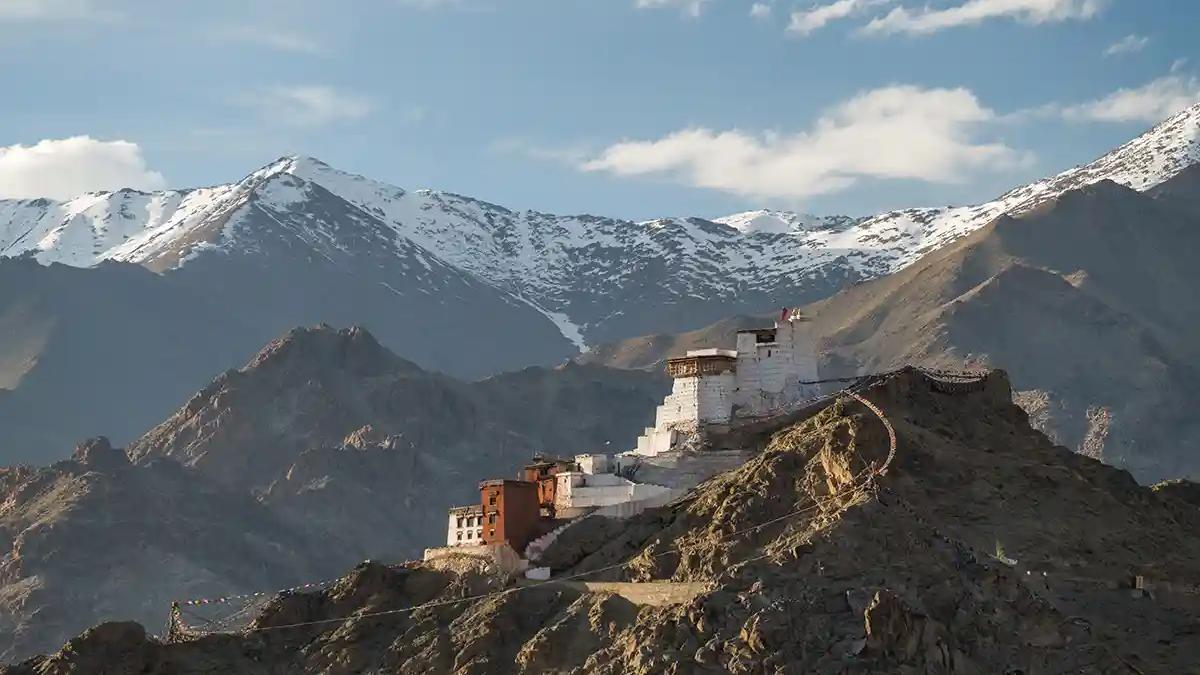
Thiksey Monastery perched on a hilltop in Leh, Ladakh, resembling the Potala Palace, under a cloudy sky

A Honest Note on Climate Change

The monsoon-safe framing above carries one caveat that should be stated plainly. Climate change is increasing cloudburst risk — August 2025 brought Leh’s highest rainfall in 52 years and flash floods in Lamayuru. These remain exceptional events — not the norm — but the frequency of high-rainfall outlier years is increasing.

The Lamayuru flash floods were highly localised and difficult to predict or forecast precisely, according to Sonam Lotus, Director of the Meteorology Centre, UT Ladakh. The practical implication: check the IMD Leh station forecast before any high-pass drive in July-August, build in buffer days, and avoid camping in narrow river gorges during unsettled weather. For the vast majority of July and August days, none of these precautions are needed — but being aware of the exception is what separates a well-prepared traveler from one caught off-guard.

SUV parked near Sarchu milestone on the Manali-Leh Highway showing distance markers to Baralacha La pass, Ladakh

The Best Months by Traveler Type

For the first-time visitor who wants everything open and straightforward: June or September. Both routes are fully operational, all passes are accessible, and the logistics are as close to frictionless as Ladakh gets. September offers slightly fewer crowds and arguably the best light for photography as the summer haze clears.

For the budget traveler who doesn’t mind flying in: July or August. Accommodation rates drop noticeably from peak June pricing, availability is better, and the valley experience is identical to peak season. Fly both ways and bypass the approach road monsoon entirely.

For the traveler who has already done the standard circuit: October. The crowds have gone, the poplar and willow trees turn yellow and orange across the Indus Valley, and the roads are at their most maintained after a full summer of BRO work. It’s the closest Ladakh gets to a private experience on the standard circuit.

For the traveler specifically seeking winter: January–February for the Chadar Trek (Zanskar River, frozen, -30°C minimum — not a casual winter trip). Late December through early January for snow leopard tracking near Hemis National Park, where leopards descend to lower elevations as prey moves down.

For travelers on the Leh Ladakh Full Circuit: September is optimal — all passes stable, Pangong Tso accessible, Nubra Valley roads reliable, and the light in the late afternoon across the valley produces the kind of photographs that June’s dustier air can’t match.

Two travelers walking along the shoreline of Pangong Lake, Ladakh, with the Changthang mountain range in the distance

Practical Month-by-Month Tips

June: Book accommodation at least 3–4 weeks in advance. Pangong Tso camps in particular book out early. Highest prices of the year.

July–August: Fly into Leh; avoid road trips from Manali if the highway has seen recent rainfall. Check BRO road status daily if driving. Carry waterproof layers even if it’s dry — a single cloudburst can change road conditions fast.

September: Single best all-round month. Book at least 2 weeks ahead as the September word has spread and demand has risen significantly in recent seasons.

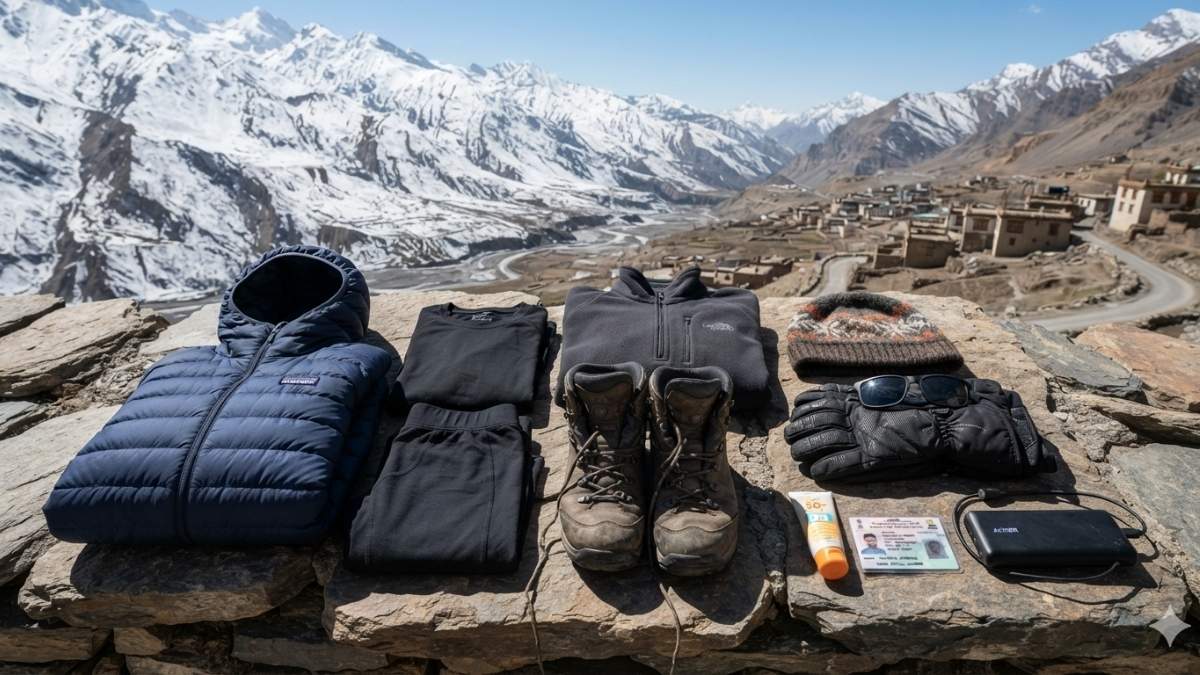
October: Carry serious cold-weather gear — nights in Nubra and at Pangong drop below -5°C by mid-October. Confirm Manali-Leh Highway status — it typically closes mid-to-late October.

January–February: Fly only. Prepare for -20°C or lower. If doing the Chadar Trek, book an operator who has done it for multiple seasons — the route changes each year based on ice conditions.

Aerial view of Leh city, Ladakh, showing traditional houses set against the Stok Kangri snow-capped peaks

The Bottom Line

The best month to visit Leh and Ladakh is the month that matches what the trip is actually for. September for the most complete experience. July and August for travelers smart enough to fly in and beat the crowds. October for the autumn light and empty roads. Winter for the Chadar Trek or snow leopard seekers only.

What the standard “visit June to September” advice gets right is the broad access window. What it consistently gets wrong is treating July and August as risk months when the actual risk — the approach road — has a straightforward bypass solution, and the reward inside Ladakh is a quieter, warmer, and often more affordable version of the exact same destination.

For travelers planning the full Leh Ladakh circuit, The Travel Story’s Leh Ladakh Full Circuit covers Pangong Tso, Nubra Valley, Khardung La, and the complete loop with supported logistics from Delhi through September.

Quiet, uncrowded stretch of Pangong Lake, Ladakh, with a parked scooter and prayer flags, away from peak tourist season

FAQ: Best Month to Visit Leh and Ladakh

1. What is the best month to visit Leh and Ladakh overall? September is consistently the strongest single month — both major routes are open and stable, skies are at their clearest, crowd levels are lower than June-July peak, and the autumn light across the Indus Valley is exceptional. June is the alternative for travelers prioritising full access over crowd levels.

2. Is it safe to visit Ladakh in July and August during monsoon? Yes — with context. Ladakh is a cold desert in the Himalayan rain shadow and receives approximately 15 mm of rainfall during the entire July-August period combined. The valley itself stays largely dry and clear. The risk is on the approach roads (Manali-Leh and Srinagar-Leh), which can see monsoon-related landslides. Flying into Leh bypasses this entirely.

3. Why does Ladakh get so little rain during monsoon? The Great Himalayan Range acts as a natural barrier, blocking the Indian Ocean monsoon clouds before they reach Ladakh. The clouds exhaust their moisture on the southern slopes of the Himalayas and arrive in Ladakh’s cold desert as dry air. This rain shadow effect gives Ladakh just 100 mm of annual precipitation — less than many cities receive in a single week of monsoon.

4. Is Ladakh less crowded in July and August? Yes, significantly. Most travelers avoid the monsoon months due to concerns about rainfall — which don’t apply to the valley itself, only the approach roads. This makes July-August the quietest period of the summer season within Ladakh, with better availability and lower accommodation costs than June.

5. Can Ladakh be visited in winter (December–February)? Yes, via flight to Leh only. The Manali-Leh highway is closed and the Srinagar-Leh highway is unreliable in deep winter. Winter draws travelers for the Chadar Trek on the frozen Zanskar River (January-February) and snow leopard sightings near Hemis National Park. Temperatures drop to -20°C to -30°C — serious cold-weather preparation is non-negotiable.

6. When is Pangong Tso accessible? Pangong Tso is accessible from approximately June through mid-October when the road from Leh via Chang La (5,360 m) is open. It is not accessible in winter. Peak crowds at Pangong are in June and early July; September visits offer the same landscape with considerably fewer other travelers.

7. Is October a good time to visit Ladakh? Yes — an underrated window. Both approach roads are still open in early October, crowds are thin, accommodation prices drop, and the Indus Valley poplars turn gold. The risk: Manali-Leh Highway can close mid-to-late October after early snowfall. Travelers should monitor BRO road status and avoid committing to non-refundable bookings on the Manali side in late October.

8. What is the rainfall in Leh during July? According to IMD (Indian Meteorological Department) data, Leh receives approximately 15 mm of rainfall during July in a typical year. In low-rainfall years (2012, 2020), that figure dropped to under 0.5 mm. In exceptional years (2023), Ladakh received 58.8 mm in July — the highest in 14 years at the time. The vast majority of years fall well below this outlier figure.


Leave a Comment

Your email address will not be published. Required fields are marked *