The Ultimate Spiti Bike Trip: Honest Guide for Bikers

Most bikers who consider a Spiti bike trip already sense it is unlike anything else on two wheels in India. The landscapes they’ve seen in photographs, the passes they’ve read about, the stories from riders who came back changed points to the same conclusion. Spiti Valley is the route that separates the casual rider from the committed one, and the bikers who go know exactly why they went.

What separates a good Spiti bike trip from a poorly planned one is almost never the bike. It’s preparation — understanding the road before the road introduces itself, knowing what altitude does to a body before the body finds out the hard way, and having the right support structure in place when things go sideways.

This isn’t a guide written from research. This is a guide written from experience about the terrain, the altitude, the culture, the gear, and the conditions that determine whether a rider comes home exhausted and satisfied or exhausted and underprepared. For those who prefer riding with a structured group, medical support, and luggage handled by a backup vehicle, the Spiti Biking Expedition by The Travel Story runs batches from June through end of September.

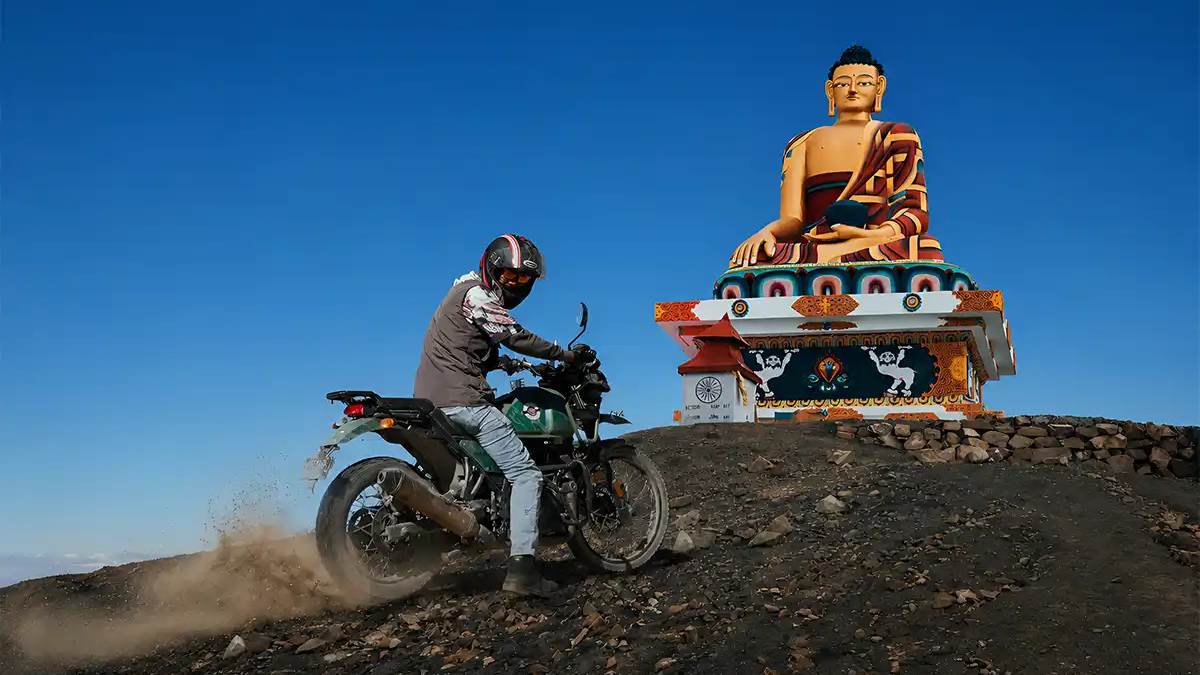
A motorcyclist drifting past the giant golden Buddha statue at Langza village on an adventurous Spiti bike trip.

Why the Spiti Bike Trip Holds a Different Standard

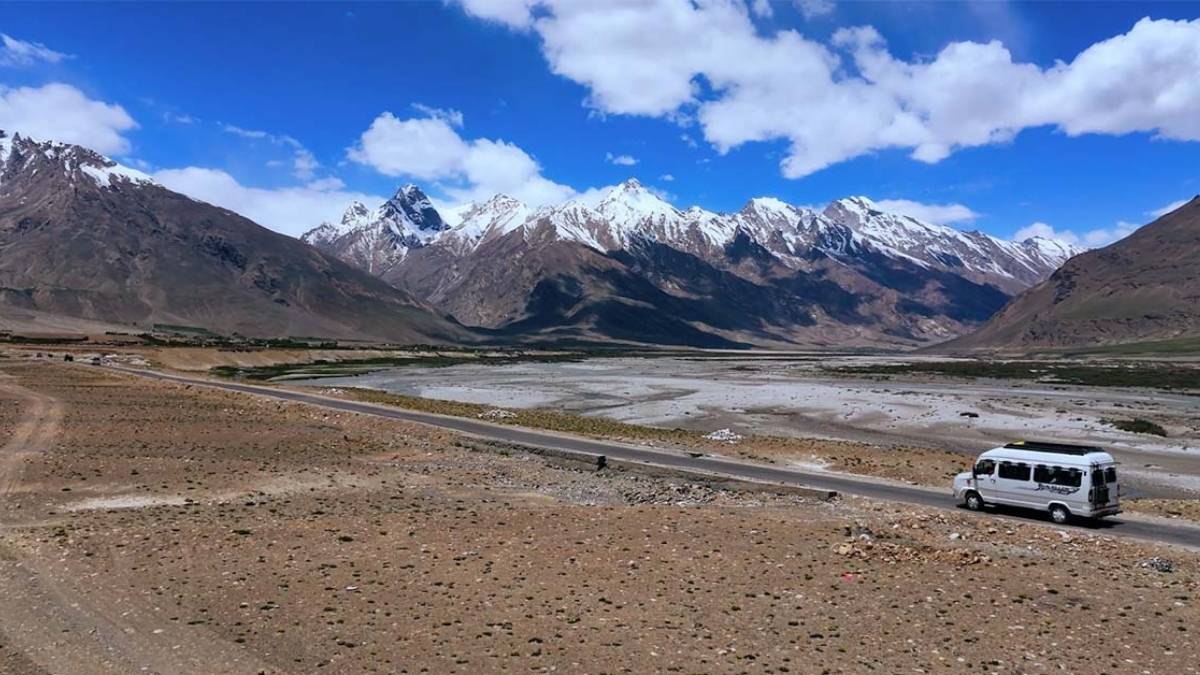
Spiti Valley sits inside the Himalayan rain shadow that is technically a cold desert at elevations between 3,500 and 5,000 metres. The landscape offers none of the visual softness that characterises other Himalayan destinations. There are no forests after a certain altitude, no gradual transition from plains to mountains. The terrain shifts abruptly and without apology.

Riders who have covered this route describe the experience consistently: the road demands attention that most other Indian highways simply do not. Stretches of tarmac give way to gravel, gravel gives way to loose rock, and loose rock occasionally gives way to a river crossing. All of this happens within the same riding day.

That is not a flaw in the route. For the bikers who are drawn to it, that variability is the point.

A Spiti Valley biking route also passes through some of the most historically significant geography in the Indian Himalayas — monasteries that predate most modern nations, villages that sit at altitudes where other civilisations never settled, and roads that exist because the Border Roads Organisation carved them out of mountains to serve strategic purposes, not tourist ones.

A convoy of adventure motorcyclists navigating a rugged dirt road beneath massive cliffs during a Spiti bike trip.

The Route: Delhi to Chandratal and Back

The Spiti biking expedition covers a circuit of roughly 1,600 km over 6 nights and 7 days, running Delhi to Manali to Jibhi, then climbing through Jalori Pass into the Sutlej Valley, before crossing into Spiti via Sangla, Chitkul, Nako, Tabo, and finally Kaza.

Route overview: Delhi → Manali → Jibhi (via Aut) → Sangla (via Jalori Pass) → Chitkul → Nako (via Khab Sangam) → Tabo → Dhankar → Kaza → Kaza local (Key, Hikkim, Komic, Langza) → Chicham Bridge → Kunzum Pass → Chandratal → Manali → Delhi

Key route facts:

  • Jalori Pass (3,120 m): m the first major high-altitude crossing; a gradual warm-up for what follows
  • Khab Sangam: Confluence of the Spiti and Sutlej rivers — one of the more striking geographical landmarks on the route
  • Lepcha La Pass: Newly opened pass for tourist that sits at 3,920 m
  • Kunzum Pass (4,551 m): which is the the official gateway between Lahaul and Spiti; open June to mid-October
  • Chicham Bridge: Asia’s highest suspension bridge, connecting two villages across a 150-metre gorge
  • Chandratal Lake: The circuit’s final destination; a glacial lake with near-zero light pollution and a beauty that can nowhere to be found elsewhere.
Bikers taking a break along a dramatic cliff road at Khab Sangam during a scenic Spiti bike trip

Best Time for a Spiti Bike Trip

SeasonRoad ConditionsTemperature RangeVerdict
JunePasses just opening; some loose sections8–18°C days / -2–5°C nightsGood. Verify Kunzum status before departure
July–AugustWarmest; monsoon can affect Kinnaur approach12–22°C days / 5–10°C nightsManageable with flexibility built in
SeptemberMost stable roads; clear skies; autumn light8–18°C days / -2–5°C nightsGood but slight chances of snowfall
Early OctoberBeautiful but Kunzum closure risk rises sharply2–12°C days / -8–2°C nightsHigh risk of being stranded — monitor BRO updates daily

The Manali–Kaza route via Kunzum Pass is typically open from late May to mid-October. In 2025, snow clearance on this route began in April, and the road opened around late May, remaining accessible until mid-October when early snowfall forced closure.
Pro Tip: Riders should always verify current road status with the Border Roads Organisation before departure as the conditions can change within 24 hours.

A solo rider riding through patchy road of Spiti Vlley

Essential Gear for Your Spiti Valley Biking Route

Your motorcycle is only as good as the gear you’re wearing. For a Spiti bike trip, you need to prepare for extreme conditions.

Protective Gear: A quality helmet is non-negotiable. The roads are challenging, and a fall at altitude is exponentially more serious. Invest in a full-face helmet with good ventilation. Riding jacket, gloves, and pants should be abrasion-resistant. Boots that cover your ankles are essential. Yes, you’ll be hot during the day, but these roads demand respect.

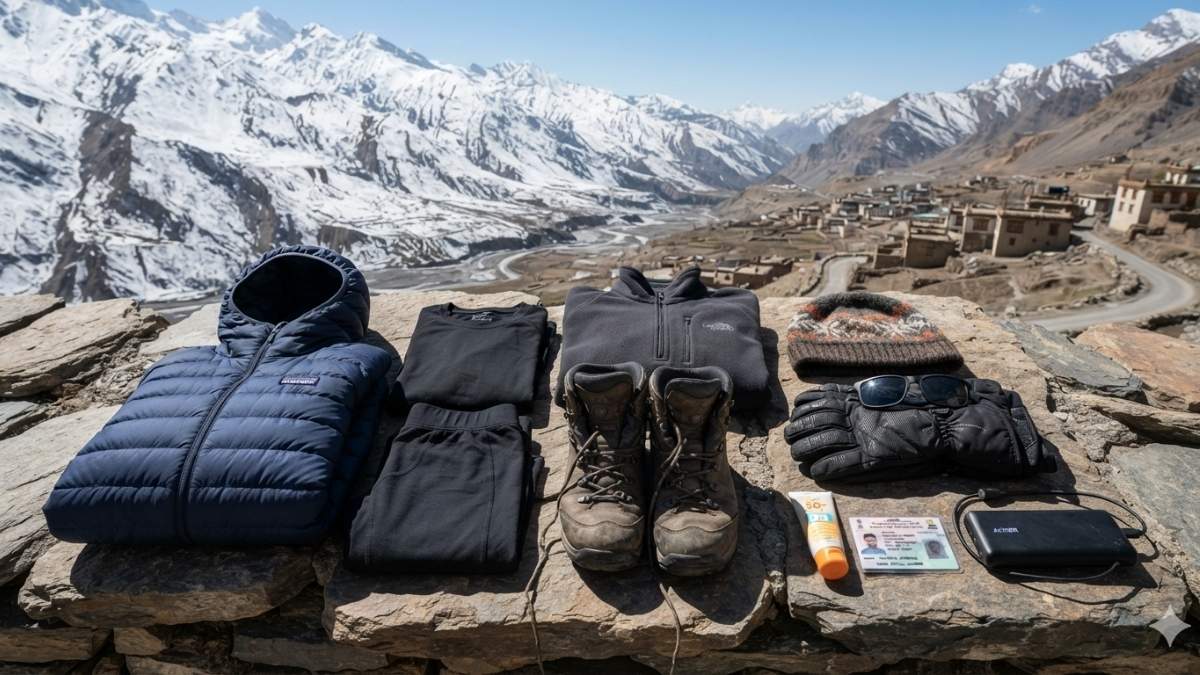
Cold Weather Gear: Even in summer, nights at altitude are freezing. Bring thermal layers, a good quality down jacket, and a windproof outer layer. Merino wool is your friend. Your hands will get cold on the bike—heated grips are worth their weight in gold, or at least invest in good insulated gloves.

Motorcycle Maintenance: Carry spare spark plugs, oil, coolant, and a basic tool kit. The roads are rough, and your bike will take a beating. Check your tire pressure regularly—altitude and temperature changes affect it. Bring a portable air pump. Your chain will need regular lubrication. The dust is relentless.

Navigation and Communication: Download offline maps before you leave. Cell service is spotty at best. A GPS device or a smartphone with offline maps is essential. Consider a satellite communicator if you’re really concerned about emergencies. A basic first aid kit is mandatory.

Motorcyclists wearing protective gears and riding on a paved winding highway with snow-capped mountains during an adventurous Spiti bike trip in Himachal Pradesh.

Altitude: The Variable Most Bikers Underestimate

The motorcycle can ascend Kunzum Pass in the time it takes a body to develop Acute Mountain Sickness. That disconnect is where most altitude-related problems on the Spiti bike trip begin.

Spiti Valley itself is a cold desert and receives very little rainfall, but landslides are common in Kinnaur and on the Manali route, and road conditions can deteriorate quickly. Altitude adds a separate layer of physical stress that compounds with long riding days.

What riders who have handled altitude well on this route consistently do:

  • Begin with Manali to Jibhi as an acclimatisation buffer before entering Spiti
  • Carry Diamox (Acetazolamide) — prescribed by a doctor before the trip, not purchased at a pharmacy en route
  • Avoid alcohol the night before any high-pass riding day — alcohol at altitude accelerates dehydration and worsens AMS symptoms
  • Treat headache, nausea, and dizziness as signals to stop, not push through
  • Know that the nearest proper hospital is in Rampur Bushahr, over 250 km from Kaza — descent is the only fast response to worsening symptoms

Riders with pre-existing cardiac or pulmonary conditions should obtain clearance from a high-altitude specialist before planning this trip. The Travel Story carries medical equipment throughout the expedition, which provides a meaningful safety margin — but it does not replace individual preparation.

Motorcyclists parked on a helipad at dusk against snow-capped peaks in Nako Village during a Spiti bike trip.

Main Attraction Of Spiti Bike Trip

Chitkul (3,450 m): The last inhabited village on the Indo-Tibet border. The road ends at a military checkpoint. The river here is glacier-fed and distinctly blue. Bikers who skip Chitkul because it requires a detour consistently report regretting it.

Lepcha La Pass: Sitting at 3,920 m, Lepcha La is one of the newest motorable passes that is open for tourists.

Shipki La Pass: At 3,930 m, Shipki La is another legendary high-altitude pass that connects Spiti with Kinnaur and also sharing the border with Tibet. This pass offers you a view from zero point from where you can see Tibet Autonomous Region of China.

Tabo Monastery (3,280 m): It is one of the oldest continuously functioning monasteries in the Himalayas. The mud-brick complex holds murals and sculptures that have survived over a thousand Spiti winters. Entry is permitted; silence is expected.

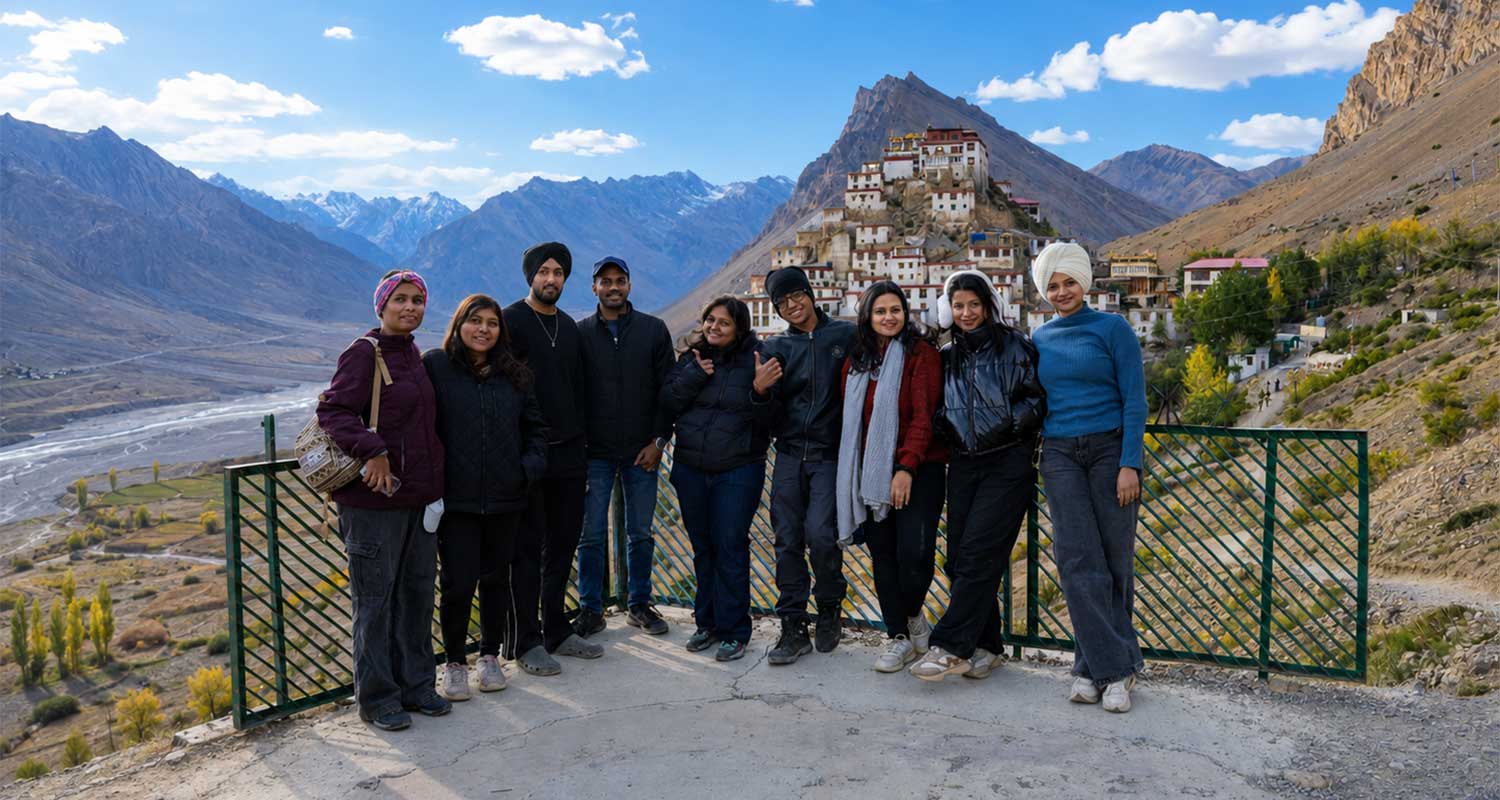
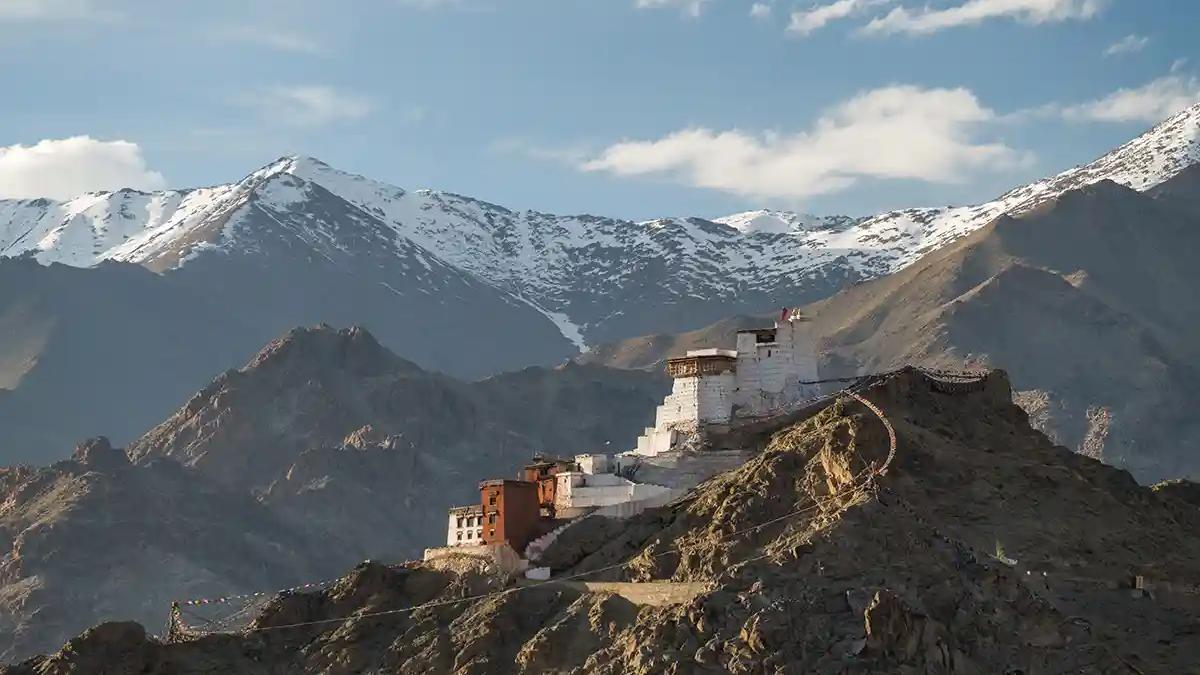
Key Monastery (4,166 m): The most photographed structure in Spiti Valley for good reason. Built into a hilltop above the Spiti River, Key houses over 300 monks and serves as a functioning centre of Tibetan Buddhist learning.

Hikkim Post Office (4,588 m): The world’s highest functioning post office. Letters posted here carry a stamp that certifies the altitude — a detail that has made this a pilgrimage stop for bikers who want a record of the highest point their trip reached.

Chicham Bridge: Asia’s highest suspension bridge connects two villages across a 150-metre gorge. The bridge replaced a ropeway system that villagers used for decades.

Chandratal Lake (4,300 m): The circuit’s final destination before the return to Manali. The name translates as “Moon Lake” — the shape of the shoreline, visible from above, gives it the name. Camping requires a permit; the zone is restricted to reduce the environmental impact that unrestricted camping caused before regulations were introduced.

Adventure motorcyclists posing on the high Chicham Bridge decorated with prayer flags during their Spiti bike trip.

Cultural Respect on a Spiti Bike Trip

Spiti’s villages are Tibetan Buddhist in culture and practice, not in the heritage-tourism sense but in the lived, daily sense. Monasteries here are active religious institutions.

  • Footwear comes off at the entrance of every monastery and most temples — without exception
  • Photography of monks, elderly residents, and ceremonies requires explicit permission, not assumed acceptance
  • Honking near monasteries is considered disrespectful — riders who have spent time in these villages consistently note that locals remember which riders slowed down and which ones didn’t
  • Buying from local guesthouses and shops keeps money within the village economy — a consideration that matters in a region where the economy is almost entirely dependent on short-season tourism

The pace of life in Spiti villages is unhurried by design, not circumstance. Riders who match that pace for even an afternoon consistently report the most meaningful interactions of their trip.

Smiling Buddhist monks wearing traditional robes and a yellow hat at Key Monastery.

Permits and Documents

  • Indian nationals: No special permit required for Spiti Valley
  • Foreign nationals: Inner Line Permit (ILP) required; available in Kaza or Recong Peo
  • All riders: RC, insurance certificate, and PUC must be current — checkposts are frequent and thorough between Manali and Kaza
  • Carry multiple photocopies of all documents — originals stay in the bag

The Spiti Bike Trip: More Than Just a Ride

When you’re standing at Chandrataal Lake at sunrise, watching the light hit the mountains, you’ll understand why people come back to Spiti again and again. A Spiti bike trip isn’t just about conquering a challenging motorcycle route. It’s about pushing your limits, connecting with nature, and discovering something about yourself in the process.

The Spiti Valley biking route will test you. Your bike will complain. it will also ache by riding so long and might mind will doubt. But you’ll also experience moments of pure, unfiltered joy. You’ll meet people who will become lifelong friends. You’ll see landscapes that will stay with you forever.

So plan your motorcycle trip to Spiti. Check your bike. Pack your gear. And get ready for an adventure that will change you.

The mountains are waiting.

A group of adventure motorcyclists riding along a winding mountain highway in Himachal Pradesh on a Spiti bike trip.

Quick FAQ: Common Questions About Your Spiti Bike Trip

Q. What is the Spiti bike trip route from Delhi?

Ans. The standard Spiti bike trip from Delhi follows: Delhi → Manali → Jibhi → Sangla (via Jalori Pass) → Chitkul → Nako → Tabo → Kaza → Chandratal → Manali → Delhi. The complete circuit covers approximately 1,600 km over 7 to 10 days depending on pace.

Q. When is the best time for a Spiti bike trip?

Ans. September is the most reliable month for a Spiti bike trip — roads are stable, skies are clear, and the landscape is at its most dramatic. The overall riding window runs from late May to mid-October. Kunzum Pass, the main entry point from the Manali side, closes with the first heavy snowfall — sometimes as early as late September.

Q. Is a permit required for a Spiti bike trip?

Ans. Indian nationals do not require a special permit to ride through Spiti Valley. Foreign nationals need an Inner Line Permit, available in Kaza or Recong Peo. All riders must carry a valid RC, insurance, and PUC — checkposts between Manali and Kaza check every vehicle.

Q. Which bike is recommended for a Spiti bike trip?

Ans. The Royal Enfield Himalayan, Royal Enfield 350/411, and BMW G 310 GS are the most commonly used bikes on this route. Ground clearance and low-end torque matter more than engine displacement. Fully-faired sport bikes are not suitable — fairings sustain damage on river crossings and the ergonomics become punishing across long days on rough terrain.

Q. Is the Manali to Kaza road open in June?

Ans. Typically yes, by late June, though the exact date varies by year depending on winter snowfall. The BRO usually begins snow clearance in April and the route opens between mid-May and late June. Riders should check current BRO road status updates before finalising departure — the pass can reclose after unexpected snowfall even in July.

Leave a Comment

Your email address will not be published. Required fields are marked *