Spiti Valley

Find out more about Spiti Valley with the help of the Spiti Experts. From Travel Guides to Hacks & Real Stories to Legends. All sorted in one place

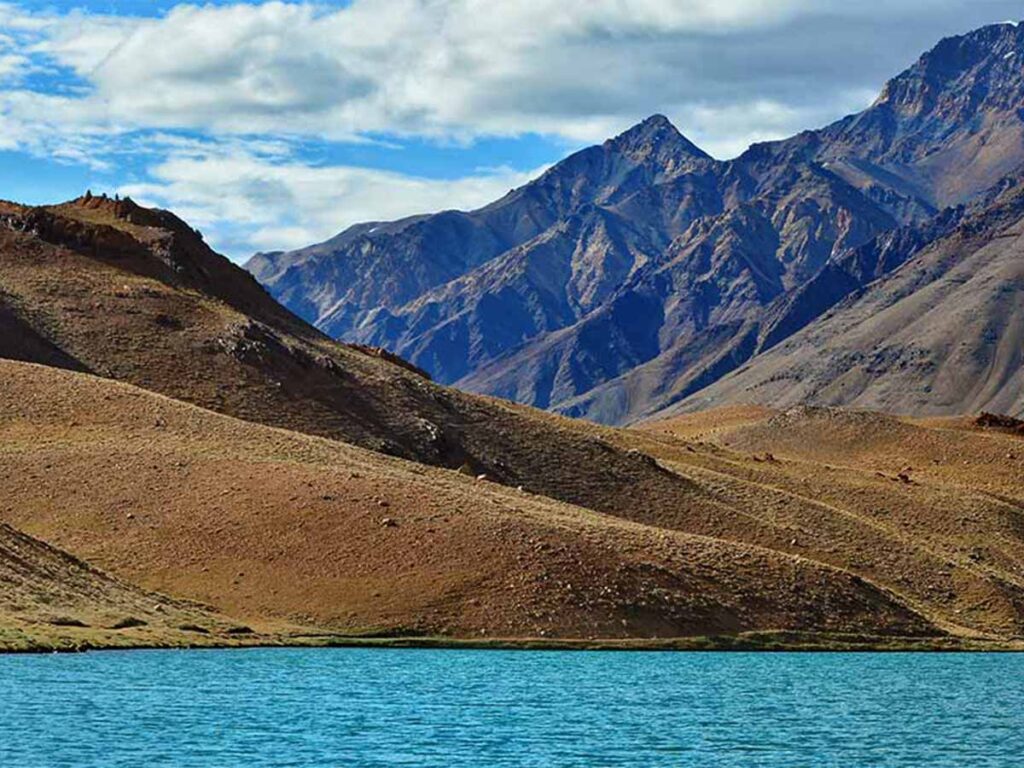
Chandratal Lake with turquoise colour water surrounded by Rocky mountains

Chandratal Lake: The Complete Travel Guide For 2026 

There are some moments that remain with you forever and just like that somewhere between Kunzum Pass and the edge of the Spiti Valley where the road ends, the silence swallows everything a crescent-shaped lake appears out of nowhere, shimmering in shades of blue and green that don’t feel like they belong on this planet. That’s Chandratal. And once you see it, it’s very hard to stop thinking about it. If you’ve been researching Himalayan lakes and wondering whether Chandratal is worth the effort then without a second thought you should go for it but if you have no idea how to reach there on your own then you just need to join our Spiti with Chandratal batches . But only if you go in prepared. This guide will tell you exactly what Chandratal is, why it matters, when to go, how to get there, and what nobody tells you before you leave. Why Chandratal Lake Is Special? Chandratal Lake sits at an altitude of roughly 4,300 metres (14,100 feet) in the Lahaul and Spiti district of Himachal Pradesh. The name means “Moon Lake” in Hindi — named for its distinctive crescent shape when viewed from above. It’s part of the Chandratal Wildlife Sanctuary and is listed as a Ramsar Wetland of International Importance, which means it’s ecologically protected. The lake feeds into the Chandra River, a tributary of the Chenab. Beyond geography, Chandratal carries real cultural weight. Local legend holds that this is where the god Indra descended to take the legendary warrior Yudhishthira to heaven, leaving his human body behind at the water’s edge. Whether or not you follow the mythology, standing at that shore — sky above, snow peaks all around, zero phone signal — it’s not hard to see why people believed something divine happened here. What makes this lake so different from more popular Himalayan lakes like Pangong Tso is the relative rawness of the experience. There’s no town nearby. No chai shops right at the edge. No loud tourists roaming around. You park your vehicle, walk 1-1.5 km, and then you reach Chandrataal where you are completely alone with the lake. That’s increasingly rare in the Indian Himalayas. Best Time to Visit Chandratal Lake This is one of the most important decisions you’ll make. Chandratal isn’t accessible year-round. The road to the lake is buried under snow from October to May, and getting the timing wrong means either a wasted trip or a dangerous one. June to mid-July is the most popular window. The snow is melting, the landscape is green and dramatic, and the sky is usually clear. Temperatures at the lake range from 5°C to 10°C during the day and drop to near freezing at night. Mid-July to August brings the monsoon. The Manali route can become risky due to landslides and flooded roads. If you’re approaching via Shimla and Spiti, the risk is lower (Spiti sits in a rain shadow), but it’s still worth monitoring the road conditions daily. September to early October is arguably the best time for experienced trekkers and photographers. The crowds thin out significantly, the air is crystal clear, and the high-altitude colours shift to warm, earthy tones. However, temperatures drop fast — night temperatures can fall below -10°C by late September. After mid-October — don’t bother. The roads close, and anything beyond that is for trained mountaineers only. Period Conditions Best For June – mid-July Open, green, mild First-timers Mid-July – August Monsoon risk (Manali side) Spiti-side travellers September – early Oct Clear, cold, fewer crowds Photographers, trekkers After mid-October Roads closed Avoid How to Reach Chandratal: Your Route Options There are two main routes to Chandratal, and they’re not equally easy. Your starting point, travel budget, and risk tolerance should determine which one you pick. Route 1: From Manali via Atal Tunnel Distance: ~115 km from Manali to ChandratalEstimated travel time: 6–8 hours (on a good day)Road condition: Very rough. This is the shorter route, and the one most adventure travellers use. Here’s the sequence: How to travel: Private taxis from Manali (Innova or Bolero) and Organized tours that include Chandratal cost ₹8,000–₹15,000 per person for 2-3 day itineraries. Route 2: From Shimla via Spiti Valley (Kinnaur-Spiti Route) Distance: ~430 km from Shimla to ChandratalEstimated travel time: 3–4 daysRoad condition: Long, but generally better maintained than the Manali route This is the classic Spiti Valley road trip route. You drive through Kinnaur, then Spiti, and approach Chandratal from the Losar side. How to travel: Most people doing this route book either private tours or group tours. Buses from Shimla to Kaza run a few days a week (HRTC), and from Kaza you can arrange local transport to Chandratal. Scenic highlights: Kinnaur Valley and its apple orchards, Nako Lake, Pin Valley, Key Monastery near Kaza, Chicham Bridge (the highest motor bridge in Asia), the vast open expanse of Spiti. This route is highly recommended if you have 7-9 days and want a complete Himalayan road trip, not just a quick lake visit. Practical Tips and Safety Advice This is where most travel blogs either skip to pretty photos or give vague advice. Here’s the honest version: Altitude sickness is real. At 4,300m, even fit people feel the altitude. If you’re coming from Delhi, don’t rush straight to Chandratal in one day. Spend at least one night in Manali (2,050m) or ascend gradually from Shimla. Headaches, nausea, and dizziness are warning signs. Shortness of breath at rest or confusion means you need to descend immediately. Weather can turn fast. Even in June, snowstorms can appear without warning at this altitude. Check weather forecasts, carry warm layers regardless of the daytime temperature, and have a plan if you need to turn back. The road is genuinely bad. Do not attempt the Kunzum Pass road in a vehicle that isn’t built for high-clearance, rough terrain. Breakdowns in this area are serious because mobile networks are non-existent near the lake and the nearest mechanic is hours away. Carry enough

Chandratal Lake: The Complete Travel Guide For 2026  Read More »
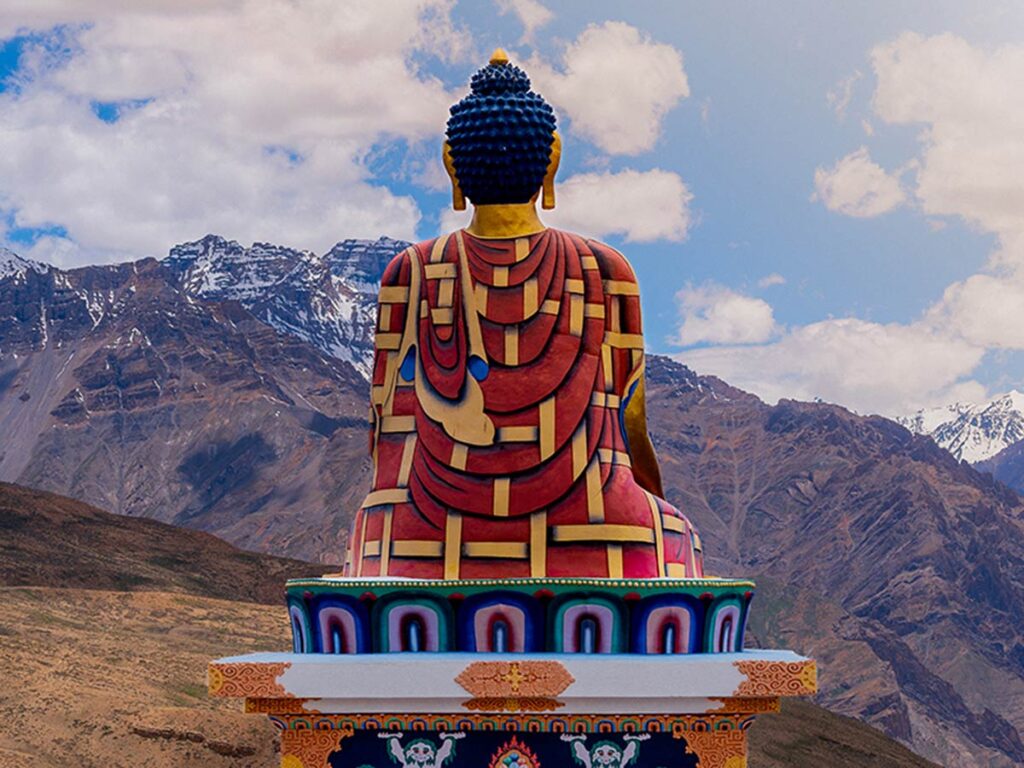
Buddha statue in Langza overlooking the Spiti Valley.

How to Reach Spiti Valley from Delhi – Complete 2026 Guide

You’ve been dreaming about Spiti Valley for months to see the raw and rugged mountains as dramatic as Ladakh, ancient monasteries like Tabo and Dhankar, and clear blue skies that seem to go on forever. But every time you search for how to get there from Delhi, you land on blogs that contradict each other or quote roads that are closed. We get it. And we’re fixing that right now. By the time you finish reading this, you’ll know exactly how far Spiti Valley is from Delhi, which route suits you best, the costs involved, and a 7-day itinerary you can follow without second-guessing yourself. Everything you need is right here, in one place. Delhi to Spiti Valley Distance & Routes The distance from Delhi to Spiti Valley sits at roughly 700–770 km, depending on which route you choose. There’s no shortcut and you have to either drive through Shimla or Manali to reach Kaza. Both roads climb deep into the Himalayas and can be little challenging for first-timers. Recommended duration to reach Spiti from Delhi should be two or three days because it’s the smarter, safer way to arrive feeling good rather than completely exhausted. Routes to Reach Spiti Valley from Delhi Route 1: Via Shimla (Recommended) The most suitable route- Delhi–Shimla-Kaza-Manali is the one you can trust. Covering approximately 700 km over 2–3 days via NH5, the road eases you in gently — Along the way, you pass through some genuinely beautiful places like Shimla, get to see apple orchards of Narkanda, streets of Rampur, and cross the dangerous but one of the most scenic route- Indo-Tibet Highway. Each stop feels different from the last. Reckong Peo comes next, and then finally Kaza. The gradual altitude gain significantly reduces Acute Mountain Sickness (AMS) risk, road conditions remain reliable throughout, and unlike the Delhi to Spiti Valley by Manali route, this highway stays open year-round. Route 2: Via Manali (Scenic & Adventurous) For experienced drivers and adventure seekers, the Delhi to Spiti Valley via Manali route delivers the kind of road trip stories you’ll tell for years. Covering approximately 750 km over 2–3 days, the road takes you through Manali’s pine-covered valleys, the engineering marvel of the Atal Tunnel, the rugged high-altitude plains of Gramphu, and the legendary Kunzum Pass (4,551 m) before descending into Kaza. Open only from June to October, this route demands driving confidence but rewards you with the most dramatic, adrenaline-charged entry into Spiti Valley imaginable. Pro Tip: Always verify road status on the HRTC website if you’re travelling from Manali route. Delhi to Spiti Valley by Car Travelling by car from Delhi to Spiti Valley is the most popular option — it gives you complete control over pace and stops. A 4-Wheel Drive or high-clearance SUV (Thar, Scorpio, Fortuner, Innova Crysta, Jimny) is strongly recommended. Sedans are not suitable beyond Nako on the Shimla route or on Kunzum Pass. The cost of fuel of the whole Spiti Trip will be between ₹6,000 to ₹12,000  Pro Tip: Choose Shimla route while going and Manali while returning for a complete circuit. Delhi to Spiti Valley by Volvo Bus The Delhi to Spiti Valley Volvo bus is the go-to for budget solo travellers. You can take a Volvo bus from Kashmiri Gate which takes about 8-9 hours approximately to reach Shimla. Generally the buses start operating in the evening. Another option is taking a direct bus to Rampur and then taking a local bus to Reckong Peo from where you can find a bus to Kaza.Volvo bus prices starts from ₹1,000 to ₹2,000 Delhi to Spiti Valley by Train There is no direct Delhi to Spiti Valley train — the valley has no rail connectivity. The closest railway station is Shimla. However, the train ride has beautiful views all the way to Shimla, passing through alpine dense forest and then proceeding your trip by road from Shimla.Train tickets prices varies from ₹200 to ₹1,500 Perfect 7-Day Spiti Valley Itinerary from Delhi FAQs: Delhi to Spiti Valley Q. How many days does it take to reach Spiti Valley from Delhi? Ans. A minimum of 2 days of travel is required to reach Kaza (Spiti’s main town) from Delhi. Most travellers take 3 days to allow for acclimatisation stops. Q. Which is better — the Shimla route or Manali route to Spiti? Ans. For first-timers, the Shimla route is safer and open year-round. The Manali route is more dramatic but open only from June to October, and Kunzum Pass demands driving experience. Q. Is Spiti Valley safe for solo travellers? Ans. Yes. Spiti is one of India’s safest travel destinations. Solo female travellers also report positive experiences. Q. Do I need a permit for Spiti Valley? Ans. Indian nationals do not need a permit. Foreign nationals need an Inner Line Permit (ILP), available online or at the SDM office in Reckong Peo. Q. Network connectivity in Spiti Valley? Ans. BSNL, Jio and Airtel have the best coverage in Spiti, including in Kaza. Some places do have weak signals but overall the connectivity is good and getting better. Q. Can I visit Spiti Valley in winter? Yes, but only via the Shimla route. Temperatures drop to -30°C and roads beyond Nako become treacherous. It’s Ans. recommended only for experienced cold-weather travellers.

How to Reach Spiti Valley from Delhi – Complete 2026 Guide Read More »

Spiti Valley, a Unique blend of Cultures

Nestled between India and Tibet, Spiti Valley is a land of harmony and cultural confluence. Locally pronounced as “Piti”, it has long been considered an ancient gateway to Tibet. It offers a unique blend of cultures. It’s rich history, sustainable way of living and deep-rooted faith makes Spiti, truly a Shangri La! Spiti – Where Religions Intermingle The culture of Spiti is an amalgamation of Hinduism and Buddhism. The teachings of Guru Padmasambhava have profoundly influenced the region and hence, Hindu Buddhism was introduced in Spiti. The locals of Spiti have deep rooted faith with strong belief system which draws a lot of inspiration from Mahabharata and Mahayna Buddhism. This is evident in sites like Triloknath Temple and Rewalsar Lake in Lahaul Valley of Himachal Pradesh – both revered by Hindus and Buddhists alike. Another example is the story of Komic Monastery. Komic is highest inhabited village in the Himalayas. Due to a drought, the monks of Komic decided to relocate the monastery to the lower-lying village of Hikkim. However, the Mahakal Statue, symbolizing the Protector of Dharma, did not move its foundation despite several efforts. In 1970s, a powerful earthquake shook the high-altitude villages of Spiti, leaving the Hikkim monastery in ruins. Astonishingly, the Mahakala statue in Komic remained steadfast, reinforcing the monks’ belief that Komic was the holiest site for their monastery. Today, the monastery continues to stand as a testament to this unwavering faith. Tabo – A Work of Art Spiti’s artistic heritage is best understood through the writings of Giuseppe Tucci, an Italian scholar who traveled through the valley on his way to Tibet. He noted that Spiti Valley is home to some of the most invaluable relics of Tibetan art and architecture. The Key Monastery in Kaza is the spiritual heart of Buddhism in the Valley. It houses exquisite murals, thangkas, rare manuscripts, stucco images and peculiar wind instruments that form part of the orchestra in Chham performances. However, it is Tabo, which is the epitome of art. It was built in 996 AD by Rinchen Zangpo. When the monastery celebrated its 1000th anniversary in his holiness the 14th Dalai Lama performed the Kalachakra ceremony for world peace. When entered the Du Khang, the main assembly hall, one can witness the beautiful frescos depicting the life of the Buddha and stucco figures of gods and goddesses. What is truly the most intriguing is the Vairocana, the Buddha in meditation, on the wall across the main door of the monastery. One can also see the beautiful paintings of Gandharvas (angels specializing in art) in Ser Khang or the golden temple. Adding more, Tabo is also called Himalayan Ajanta. Spiti – A Medicinal Expert Spiti’s spiritual and cultural roots extend into its ancient healing traditions. Bon is an ancient form of Tribal culture in Himachal has bears significant influence in the region. It is associated with shamanic rituals of Amchis, the medicine men. These medicine men carry herbal remedies in small leather pouches, crafted from the limited flora available in the valley. Their knowledge blends shamanism and herbal medicine, making them skilled in treating both physical and spiritual ailments. Spiti – A Land of Festivities Spiti’s calendar is filled with vibrant festivals, each celebrated with unique traditions. The Ladarcha Fair marks the arrival of summer. Many merchants come to the fair and trade their goods and services. Dechhang Festival is celebrated during the chilling winters full of community bonfires, dances and folk songs. Losar Festival or Halda festival is the Tiben New Year celebrated in the month of February. Nearly all monasteries uphold these traditions, offering a chance to witness the traditional dance during this festival. Spanning three days, the ceremonies feature the Chham dance, where performers don elaborate costumes and masks. One of the most awaiting ceremonies is the Tschechu Fair. The purpose is rebuilding bonds with villagers in own and nearby villages after months of winter hibernation. Just another way of Spiti proving as the land of harmony. The festival signifies increasing prosperity in times to come. Lamas, as performers, take part in the Cham Dance, dressed in vibrant costumes. This ritual involves cultural dances and mask-wearing, symbolizing the renewal of spirit and prosperity for the times ahead. Spiti – A Harmony Seen and Felt Spiti Valley is not just a land of cultural harmony—it is a place where this harmony is visible in every aspect of life. The villages, the people, the animals, everything is a radiates contentment and deep respect of nature. This strikes the harmony in the valley. There is sameness in the houses, all lime washed with painted red with chak on top. Life in Spiti is simple, sustainable, and deeply connected to the land. I now understand what Kipling meant in his book “Kim” when he said – “At last they entered a world within a world — a valley of leagues where the high hills were fashioned of the mere rubble and refuse from off the knees of the mountains, surely the Gods live here”.

Spiti Valley, a Unique blend of Cultures Read More »

How good is Spiti Valley?

Spiti Valley is a high-altitude, trans-Himalayan region in Himachal Pradesh, India, known for its serene beauty and unique landscapes.234 It is a dry and cold desert with snow-capped mountain peaks, ancient monasteries, and pristine lakes.3 The valley is situated on the India-Tibet border and is often referred to as ‘the middle land’ due to its location between India and Tibet.3 Several bloggers have shared their experiences and travel guides about Spiti Valley. For instance, one blogger described the valley as tranquil with clear skies where you can spot the Milky Way.2 Another blogger provided a detailed travel guide, including information on the best time to visit, things to carry, and recommended itineraries.4 Key attractions in Spiti Valley include the highest village in the world, Kibber, and the highest post office in the world, located in Hikkim.6 Additionally, the Moon Lake, also known as Chandratal Lake, is a popular spot due to its crescent shape and changing colors throughout the day.6 Spiti Valley offers a once-in-a-lifetime experience with its rugged beauty and cultural significance.6 Tourists can visit centuries-old monasteries, hike to picturesque lakes, and explore the valley’s rich biodiversity in places like Pin Valley National Park.6 For those planning a trip, it is advisable to start acclimatizing to the high altitude before the journey and to be cautious of the treacherous roads leading to the valley.46

How good is Spiti Valley? Read More »