You probably want one month and one clear answer. Meghalaya cannot give you that, because rain falls very differently in Sohra, Shillong and Dawki. This guide covers what every month is really like and how to pick dates that match what you want to see.
Our Meghalaya Backpacking trip is a 5 night, 6 day group trip from Guwahati, with a trip captain and 12 to 16 travellers aged 18 to 35. It runs weekly batches from October to March and starts from Rs 18,999 on triple sharing, plus 5 percent GST. See dates and the day by day plan.
Key takeaways
- The best all round window is October to November. Our pick for a first trip is November.
- December to February is the driest and sunniest stretch, best for treks and the clear Umngot River at Dawki.
- July is usually the wettest month. Sohra averages about 2,670 mm of rain on roughly 28 days.
- No single month suits every waterfall, and rain differs by place, so check Sohra, Shillong and Dawki separately.

What Is the Best Time to Visit Meghalaya?
The best time to visit Meghalaya depends on what you want, because the rain that fills the waterfalls also hides views and muddies the rivers.
For a first trip, we would pick November. That is our own judgement, not an official ranking. Rain at Sohra (Cherrapunji) drops from about 460 mm in October to about 50 mm in November, based on India Meteorological Department (IMD) averages for 1991 to 2020. Meghalaya Tourism, the state tourism department, calls October and November the post monsoon months, when clouds clear and waterfalls and rivers can still be seen at their best.
This table matches common goals to the period that fits them.
| Travel preference | Suitable period | Why it suits | Important consideration |
|---|---|---|---|
| Overall sightseeing | October to December | Rain drops after the monsoon and skies clear more often | October can still bring showers |
| Waterfalls at full flow | June to September | Official best window for Seven Sisters Falls | Cloud and heavy rain can hide the view |
| Trekking | November to February | Driest and sunniest, per Meghalaya Tourism | Cold mornings, and steps still need grip |
| Dawki river and boating | October to April | Clear water in the pre monsoon, autumn and winter seasons | Clarity is never guaranteed |
| Monsoon landscapes | June to August | Peak rain, full rivers, mist | Water activities are not permitted in most areas |
| Comfortable road travel | November to February | Least rain, so fewer rain delays are likely | Landslides and closures can still happen |
Meghalaya Weather and Seasons
Meghalaya runs on one big pattern: a long wet season and a shorter dry one.
Meghalaya Tourism splits the year into four seasons. The Meghalaya Biodiversity Board keeps it simpler: wet from May to October, dry from November to February. They overlap at the edges, so treat October and November as transition months.
| Season | Months | What to expect |
|---|---|---|
| Spring | March and April | Nippy evenings early on, many sunny days, some showers |
| Monsoon | May to September | Waterfalls and rivers in full flow, felt most around Sohra and Mawsynram |
| Post monsoon | October and November | Some rain, clearing clouds, harvest festivals |
| Winter | November to February | Driest and sunniest, with frost in parts of the Khasi Hills |

Place matters as much as month. The Biodiversity Board says the state rises from about 60 m to 1,961 m, with yearly rainfall from about 4,000 mm to 11,436 mm. Meghalaya Tourism says winter mornings in places such as Mylliem and Laitlyngkot can fall below zero, while the Garo Hills and lower Jaintia and Khasi Hills stay milder. You can feel several seasons in one day, so carry a light jacket even in warm months.
Meghalaya Month by Month Travel Guide
Here is what each month usually looks like at Sohra, the wettest and most visited rain belt, using IMD averages for 1991 to 2020. These are rounded long term averages for one station, not a forecast. Many other parts of the state get much less rain. Rainy days means days with 2.5 mm or more.

| Month | Sohra rain and feel | Waterfall experience | Best suited for | Watch out for |
|---|---|---|---|---|
| January | Dry. About 15 mm, 1 rainy day. Days near 17 °C, mornings near 7 °C. | Rain fed falls run lean | Clear views, caves, treks, Dawki | Cold mornings. Book early. |
| February | Dry. About 55 mm, 3 rainy days. Days near 19 °C, mornings near 9 °C. | Lean | Treks and river time | Showers return near March |
| March | Spring. About 360 mm, 7 rainy days. | Modest, building | Spring sightseeing, escaping plains heat | Nippy evenings, showers |
| April | About 790 mm, 16 rainy days | Building | Warmer days, Dawki before the rains | Regular showers |
| May | Monsoon starts. About 1,300 mm, 21 rainy days. | Rising fast | Early monsoon | Heavy rain warnings matter |
| June | About 2,610 mm, 25 rainy days | Strong | Waterfall lovers | Cloud hides views. Slippery steps. |
| July | Usually the wettest. About 2,670 mm, 28 rainy days. | Strong, visibility varies | Rain and mist lovers | Most delays and closed activities |
| August | About 1,770 mm, 24 rainy days | Strong | Monsoon scenery, a little less rain | Dawki muddier, per our trip pages |
| September | About 1,090 mm, 18 rainy days | Still strong | Monsoon as rain eases | Dawki muddier until about early October |
| October | About 460 mm, 8 rainy days. Skies clear more often. | Running, easier to get close | First timers wanting falls and some sun | Not fully dry |
| November | About 50 mm, 2 rainy days. Days near 22 °C, mornings near 11 °C. | Past peak, still worth seeing | Most first trips, Shillong cherry blossom | Festivals fill Shillong stays |
| December | Driest. About 10 mm, 1 rainy day. Days near 19 °C, mornings near 8 °C. | Some rain fed falls may run lower | Dry weather, treks, clear Dawki water | Cold mornings. Book early. |
June and July are close in rainfall, and so are December and January. The big drops come from September to October and October to November.
Festival dates for 2026, from the Meghalaya Tourism events page: Shillong Literary Festival from 12 November, Cherry Blossom Festival from 20 November, Me Gong Festival in Tura from 4 December, Winter Tales in Shillong from 17 December. Dates change yearly, and the same page says Shillong stays can sell out around the Cherry Blossom Festival. For New Year, see our Meghalaya New Year trip.

Three myths about Meghalaya's seasons
- "Every waterfall peaks in the same month." Meghalaya Tourism gives different windows for Seven Sisters Falls and Nohkalikai Falls.
- "Dawki is crystal clear all year." Meghalaya Tourism links the clearest water to the pre monsoon, autumn and winter.
Best Time to Visit Meghalaya for Waterfalls
Waterfalls carry the most water in the monsoon, but no single month is best for every waterfall.
Seven Sisters Falls (Nohsngithiang) drops in seven streams over a limestone cliff more than 300 metres high. Meghalaya Tourism lists June to September as the best time to see it. Nohkalikai Falls, about 340 metres tall, is different. The same department says rain collected on a small plateau feeds it and it can be seen through the year, and its page lists October to December as the best window. So be careful with any guide that names one best month for all waterfalls.
Heavy rain also brings cloud, and a strong waterfall you cannot see is a poor trade. In drier months the flow can be thinner, but valley views are often clearer. Keep one spare day around Sohra to wait for a clear window. Our best places to visit in Meghalaya guide lists the main falls and how far each one is.

Best Time to Visit Meghalaya for Trekking
Trekking is easiest from November to February because it is the driest and sunniest season.
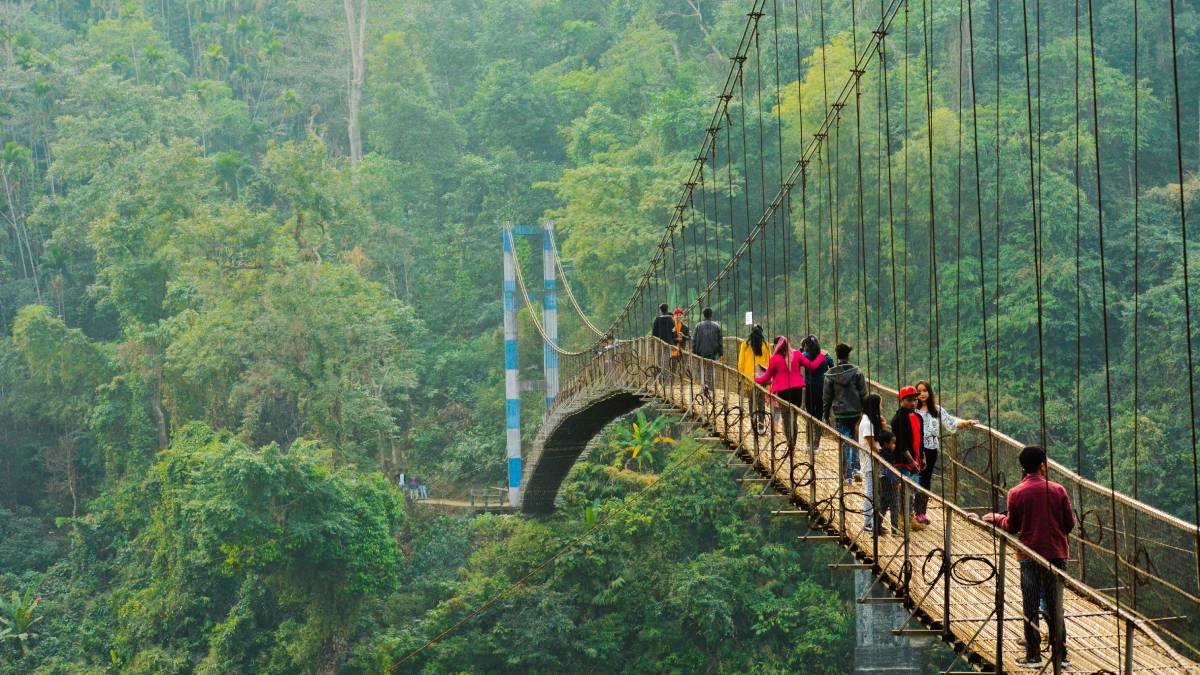
The Double Decker Living Root Bridge at Nongriat is the trek most people come for. About 3 km of walking down around 3,500 stone steps.
In the rain, wet stones make every step slower, and our Monsoon Meghalaya trip page says the descent and climb take longer. Start early in any season so you finish in daylight. Wear shoes with good grip every month. The signal weakens near Nongriat, so tell someone your plan. No month makes this trek fully safe or unsafe, so ask a local guide about the steps on the day.
Best Time to Visit Meghalaya for Dawki and River Activities
The Umngot River at Dawki looks clearest after the monsoon and in winter, and Meghalaya Tourism's own Dawki page says the same.
Dawki is a border town in the south of the state. Shnongpdeng, about 8 km north, is where most people camp and boat. The official page says the water is clear enough to count stones in the peak pre monsoon, autumn and winter seasons. The Travels Stry's trip leaders say the river runs muddier from August to early October, and that boating is often suspended in the monsoon.
Plan for three different things. A scenic visit works in any season, but clarity changes with rain. Boating is best when the river is calm and clear, and boat operators decide each day. For other water activities, Meghalaya Tourism says swimming and water activities are not permitted in most areas during the monsoon. At other times, do them only with expert supervision and safety gear. We cannot promise clear water in any month, so check with your stay the day before.

Best Time to Visit Meghalaya for Different Types of Travellers
Your travel style matters as much as the weather, so match the period to the person.
| Traveller | Suitable period | Limit to know |
|---|---|---|
| First time visitors | October to November | October is not fully dry |
| Couples | November to February | Cold mornings, busy season |
| Families | November to February, or March and April | Nongriat has about 3,500 steps each way, which may not suit young children or knee problems |
| Adventure travellers | November to February | Check trail conditions locally |
| Waterfall lovers | June to September, or October for a gentler option | Cloud, slippery steps, delays |
| Monsoon landscape lovers | June to September | Water activities mostly not permitted |
Is Meghalaya Worth Visiting During the Monsoon?
Yes, if you come for the rain itself and plan with extra time. No, if you need dry roads, long views or river activities.
Meghalaya Tourism says the monsoon shaped the state's land and gave it the name Abode of Clouds. At Sohra, July brings rain for about 28 days, and the waterfalls swell.
The same rain sets limits. The cloud can hide the view you came for. Wet steps slow every trek. Meghalaya Tourism asks visitors to watch daily forecasts for heavy rain and landslide warnings. The Umngot at Dawki runs muddier, so boating is not the highlight it is in winter.
It suits people who like mist and big water and can live with plan changes. It suits you less if you want clear skies or river activities. Our Monsoon Meghalaya trip page explains how we run the wet season. Check it for current dates.
Best Time to Visit Meghalaya for a 5 to 7 Day Trip
A 5 to 7 day trip works in any season, but the season decides how much slack you need.
The main circuit is Shillong, Sohra, Nongriat, Mawlynnong and Dawki. Our 5 night, 6 day Meghalaya Backpacking route covers it from Guwahati.
- Monsoon: Keep a spare half day. Give the Nongriat trek a day to itself. Expect cloud over viewpoints and slow roads after heavy rain.
- October to February: The steadiest weather. Sohra, Shillong and Dawki still feel different, so pack for all three.
- March and April: Sunny days with showers, so keep a rain plan.
No season guarantees every stop will be open or visible, so ask your driver each morning about road conditions.
What to Pack for Meghalaya in Different Seasons
Pack for the season you travel in, and always for rain.
| Season | Pack |
|---|---|
| Monsoon, May to September | Waterproof jacket, umbrella, bag cover, non slip shoes, quick drying clothes, insect repellent (Meghalaya Tourism's monsoon tips) |
| October and March to April | Light rain jacket, a sweater, shoes with grip |
| Winter, November to February | Thermals, warm jacket, gloves, socks, a small umbrella (Meghalaya Tourism's winter tips) |
| All year | Trekking shoes, water, snacks, power bank, offline maps, some cash for small shops and the root bridge camera fee |

Travel Tips Before Visiting Meghalaya
A few habits make any season easier.
- Check forecasts. Use IMD for heavy rain warnings and the Meghalaya Tourism notices page for local updates.
- Book with trustable travel company. Meghalaya can be tricky for a lot of people since it is far and not easily accessible for most of the indians. We have been hosting Meghalaya trips for last 4 years now with 4.8 rating on Google.
- Keep a spare day. Rain and landslides can change a plan overnight.
- Plan Guwahati carefully. Shillong is about 100 km away, Leave a buffer before onward flights.
- Follow activity rules. Do water activities only with expert supervision and safety gear.
- Book winter stays early.
Conclusion
Pick October to November for balance, December to February for dry days and clear rivers, and June to September for the biggest waterfalls if you can handle rain. Check the forecast shortly before you go and keep a spare day.
If you would rather have routes, stays and a trip captain handled, see our Meghalaya group trips.