Ask ten people which car to take to Spiti and you will hear two loud answers. Some say only a 4x4 will make it. Others say any car works. Neither is fully right. This guide shows which vehicle suits which route and season, with drivetrain and ground clearance checked for eleven popular Indian cars.
Prefer to explore Spiti in winter without driving yourself? Our Winter Spiti 4x4 Expedition takes you through the snow-covered landscapes of Spiti Valley with an experienced trip captain and a 4x4 vehicle, making your winter adventure comfortable and hassle-free.

Key Takeaways
- The Shimla and Kinnaur route stays open through most of the year, while the Manali route over Kunzum Pass is shut for roughly six to seven months.
- Many popular SUVs have no 4x4 at all. The Hyundai Creta and Kia Seltos are front wheel drive only, the Bolero Neo is rear wheel drive only, and the Thar Roxx petrol is 2WD only.
- Listed ground clearance among the models checked runs from about 160 to 180 mm (Bolero Neo) up to 233 mm (Force Gurkha), but approach and departure angles change the story.
- When the Manali to Kaza highway reopened in May 2026, it opened first for light 4x4 vehicles only.
- Winter Spiti needs more than a 4x4. It needs tyres, a cold weather vehicle check, an experienced driver and spare days.
What Are the Road Conditions in Spiti Valley?
Spiti roads are a mix of smooth tar, broken patches, rocky and gravel stretches, and on the Manali side, melt water crossing the road. Conditions change with season, weather and repair work, so check the latest status before you leave.
Shimla and Kinnaur side: The route runs on NH5 and then NH505 from Khab Sangam. It starts as a normal mountain highway. Switchback hairpins lead up to Nako, the road narrows toward Sumdo and Tabo, and landslides or heavy snow can close it for short spells.
Manali side: The road goes through the Atal Tunnel to Gramphu and Batal, climbs Kunzum Pass at about 4,550 m, then drops to Losar and Kaza. NH505 on this stretch is narrow and rough in places and asks for good mountain driving.
Altitude: Kaza sits at about 3,800 m. Engines make less power in thin air, long descents heat the brakes, and cold mornings stress batteries and fuel.
Trip Captain Note: The Shimla route can get rough, with slushy puddles, uneven roads, and black ice. Low-ground-clearance cars may scrape their underbody, while rear wheels can lose traction in slush. That’s why our captain recommends a 4×4 vehicle for better grip. Carry snow chains to improve traction on icy stretches and drive safely.
How this affects your car: Loose and broken surfaces punish low clearance and weak tyres. Slippery climbs reward traction. Long climbs at altitude reward torque. That is why one car can feel fine on one route and wrong on another.
Which Type of Car Is Suitable for Spiti Valley?
No category is right or wrong on its own. The table shows where each one fits and where it struggles.
| Vehicle Type | Where It Fits | Where It Struggles | Best For |
|---|---|---|---|
| Hatchback | Shimla route in good summer weather, with slow and careful driving | Low underbody on broken patches, small tyres, Manali route, winter | Experienced drivers on a tight budget |
| Sedan | Same as hatchback, with a more comfortable ride | Long wheelbase and low nose on rocky sections, Manali route, winter | Smooth tar stretches, mainly in peak summer |
| Compact SUV | Shimla route in summer | No extra traction, as these are front wheel drive only | First timers who drive carefully |
| Full Size 2WD SUV | Shimla route in comfort, more clearance and a sturdier build | Weight and width on narrow stretches, limited help in snow or mud | Families and groups with luggage |
| 4x4 SUV | Manali route in early or late season, snow, loose or wet sections | Needs a driver who knows how to use it, and costs more to buy and run | Experienced drivers, winter, rough diversions |
Can a hatchback or sedan reach Spiti via Shimla? Under favourable conditions, many travellers attempt it, and the Shimla and Kinnaur road is the route where it is realistic. The risks are scraped underbodies, tyre damage on sharp rock and delays after a landslide or snowfall. It is not the same as safe in any weather.
Why the SUV label is not enough: An SUV with worn tyres, tired brakes and a nervous driver is a weaker choice than a well prepared hatchback on an easy stretch. Ground clearance, tyre condition, vehicle health and driving experience decide the trip.
Is a 4x4 Necessary for Spiti Valley?
No, not for every trip. The answer depends on route, month and how rough the road is on your travel day.
| Term | What It Means | Examples Checked |
|---|---|---|
| 2WD (4x2) | Power goes to two wheels, front or rear | Creta, Seltos, Bolero Neo, Thar Roxx petrol, Fortuner petrol |
| AWD | Power goes to all four wheels automatically, usually without a low range gear | Grand Vitara AllGrip Select, XUV 7XO AWD |
| 4WD (4x4) | The driver selects 4H or 4L. Low range helps on slow, steep or slippery ground | Thar 4x4, Thar Roxx diesel 4x4, Scorpio-N 4WD, Gurkha, Jimny, Fortuner 4x4 |

| Situation | Is 2WD Enough? | What a 4x4 Adds |
|---|---|---|
| Summer, Shimla and Kinnaur route | Usually yes, if the vehicle is in good condition | Extra grip on loose patches and landslide debris |
| Summer, Manali to Kaza route | Depends on the month and stream levels | Better traction on rocky, wet and loose sections |
| Winter, Shimla and Kinnaur route | Risky on snow or ice | Better traction, but no help with braking on ice |
| Snow covered or slippery roads | Not recommended without chains and experience | More grip when moving, no extra stopping power |
A 4x4 is a tool, not a guarantee. It gets you moving on slippery ground, but it cannot fix worn tyres, weak brakes or a late start.
Best Cars for Spiti Valley
We checked drivetrain and ground clearance for each model against manufacturer pages where we could reach them and against major Indian car listings otherwise. Clearance is the listed unladen figure.
| Model | Drivetrain in India | Listed Clearance | Fit for Spiti | Watch Out |
|---|---|---|---|---|
| Mahindra Thar (3 door) | RWD and 4x4 versions. The 4x4 has a low range transfer case | 226 mm | Small groups on rough or snowy roads | Four seats, small boot. Check the 4x4 badge |
| Mahindra Thar Roxx | 4x4 on diesel only. Petrol is 2WD only | 226 mm listed | Families who want 4x4 with more space | Pick a diesel 4x4 variant on purpose |
| Mahindra Scorpio-N | 4WD only on some diesel variants. Other variants are 2WD | 187 mm | Groups with luggage | Lowest clearance in this list. |
| Mahindra Bolero Neo | RWD only, no 4x4 | 160 to 180 mm | Shimla route, tough and simple | No 4x4 and a clearance figure that varies by source |
| Force Gurkha | 4x4 only, manual only, front and rear locking differentials, low range | 233 mm | Experienced drivers on rough routes | Basic comfort, 6.3 m turning radius on the 5 door |
| Maruti Suzuki Jimny | 4WD with low range as standard | 210 mm | Light 4x4 for two or three people | Naturally aspirated petrol, compact boot |
| Toyota Fortuner 4x4 | 4x4 on diesel only. Petrol is RWD only | 225 mm | Comfortable long distance rough road travel | Large and expensive |
| Hyundai Creta | Front wheel drive only | 190 mm | Shimla route in summer | No extra traction |
| Kia Seltos | No AWD or 4x4 variant in the current India line up | 190 mm | Shimla route in summer | Same limits as the Creta |
| Maruti Suzuki Grand Vitara AWD | AllGrip Select AWD on selected petrol variants | 210 mm | Careful drivers who want extra grip | No low range. Confirm transmission and clearance on the brochure |
| Mahindra XUV700 / XUV 7XO AWD | AWD on top diesel automatic variants only | 200 mm | Families who want comfort and AWD | Not a low range 4x4 |

Do not pick a car on clearance alone. The Jimny has 210 mm but short overhangs and low range gearing. The Scorpio-N has 187 mm but more space and a stronger 4x4 on selected variants. Both can make sense for different people.
What Is the Best Car for the Shimla, Kinnaur and Kaza Route?
For most travellers, the route via Shimla, Narkanda, Rampur, Reckong Peo, Kalpa, Nako, Tabo and Kaza is the more practical way in. It is about 410 km from Shimla to Kaza, and it stays open through most of the year, apart from short closures after landslides or heavy snow.
- Road conditions: Mostly a mountain highway, rougher and narrower beyond Nako.
- Altitude gain: Kaza sits at about 3,800 m, and the climb from Shimla is spread over several days of driving.
- Rough stretches: Nigulsari has rough terrain and it is landslide prone area, while Malling Nala near Nako can develop black ice in winter. Drive slowly and carefully on both stretches.
- Clearance: A decent SUV clearance helps, but careful line choice matters more than raw figures.
- 2WD SUV: Suitable in summer if tyres and brakes are good.
- 4x4: Not needed for a normal summer trip, helpful in snow or rough weather.
Fuel needs planning. Start each day with a full tank and confirm current pump status before you go.
What Is the Best Car for the Manali, Gramphu and Kaza Route?
The Manali route runs from Manali through the Atal Tunnel to Gramphu, Chattru, Batal, Kunzum Pass, Losar and Kaza. It is shorter on the map than the Shimla route, but it is harder on the car.
- Seasonal access: The road is shut for roughly six to seven months. It usually reopens in late May or June and closes with the first heavy snowfall.
- 2026 opening: The Manali to Kaza highway reopened for light 4x4 vehicles first, with other traffic following as repairs progressed.
- High passes: Kunzum Pass is at about 4,550 m, so power loss and brake heat matter.
- Rough and rocky sections: Loose stones and uneven surfaces punish low clearance and thin tyres.
- Water and weather: Melt water can cross the road, and a warm afternoon can change a stream by evening. Snow can arrive early.
- Why traction helps: Wet, loose and slippery ground is where a 4x4 or AWD gives you the most grip.

A 4x4 gives a clear advantage early in the season, after rain or snow, and on side roads such as the one to Chandratal. It does not make the road safe in bad weather, and it does not mean the road is open. This route is not open all year.
Which Car Is Best for Spiti in Summer, Monsoon, Autumn and Winter?
| Season | Road Picture | Vehicle Fit |
|---|---|---|
| Summer (late May or June to September) | Both routes usually open. Manali route may open for 4x4 first | Shimla route: 2WD SUV in good order. Manali route: 4x4 or AWD is safer early in the season |
| Monsoon (July and August) | Short spells of rain can affect the Kinnaur stretch, with landslide and slippery road risk | Choose clearance and good tyres. Keep spare days. Check road status daily |
| Autumn (late September and October) | Colder, with the Manali route closing progressively. First snow can come early | 4x4 or AWD preferred on the Manali side. Switch to the Shimla route in October |
| Winter (November to March) | Manali route shut. Shimla route open but snowy, with night temperatures to minus 30 | 4x4 with proper tyres, an experienced driver and flexible dates |
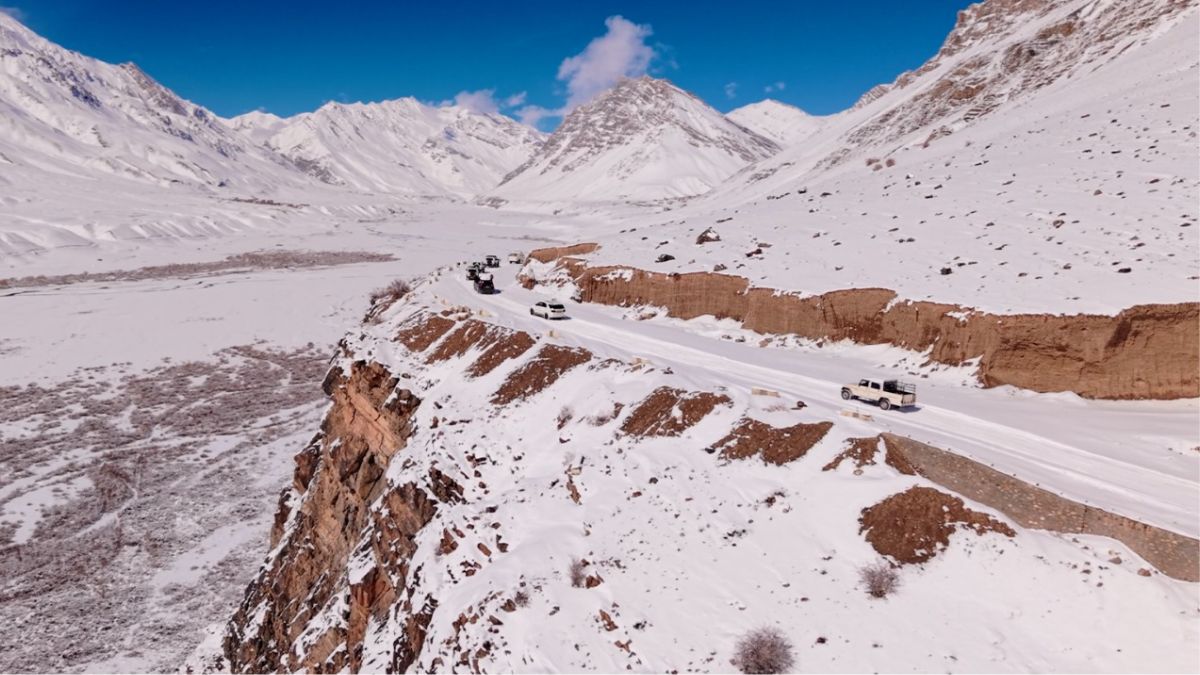
Why winter is a different level of preparation: In winter, the Shimla route is the only road in, and snow and ice change everything. Check winter suitable tyres, chains if you know how to use them, battery health, coolant strength and fuel behaviour in extreme cold. Carry warm layers, food and water in the vehicle. A 4x4 helps you move on snow. It does not make winter driving safe by itself.

If you would rather not take your own car into deep winter, our Winter Spiti 4x4 Expedition uses Jimny 4x4 vehicles with three people per car for the mountain section, and lists Thar, Scorpio and Fortuner as on demand options.
How Much Ground Clearance Do You Need for Spiti Valley?
There is no official minimum for Spiti. Ground clearance is the gap between the lowest point under the car and flat ground, usually listed with the car unladen.
- Why it matters: Broken roads, rocks and ruts can hit the lowest parts, such as the sump, exhaust and suspension.
- Passengers and luggage: A loaded car sits lower, so the real figure on your trip is less than the brochure.
- Approach angle: The steepest slope the front can climb without the bumper touching.
- Departure angle: The same for the rear. Long overhangs lose clearance here.
- Why it is not enough: A high car with long overhangs can scrape where a lower, shorter car does not.
Here is a comparison from the listings checked. The Jimny lists 210 mm with an approach angle of 36 degrees and a departure angle of 47 degrees. The Fortuner lists 225 mm but its approach and departure angles work out to about 29 and 25 degrees. A figure on paper is only the start.
Own Car, Self Drive Rental or a Driver: Which Is Better for Spiti?
| Option | Good For | Watch Out |
|---|---|---|
| Your own car | Familiar controls, no rental limits, flexible plans | Condition is your responsibility, so service it properly. Wear, breakdown and tyre damage cost money |
| Self drive rental | No need to own a suitable car, can pick a 4x4 | Check whether the rental company allows Spiti routes, breakdown cover at Kaza, and how damage is charged |
| Car with an experienced local driver | Route knowledge, no driving fatigue, better local reaction to landslides and snow | Less control over timing, and the driver should know your season and route. Costs vary, so ask for a written quote |
Do not rely on a price you read online. Get a written quote that names the vehicle, route, number of days and what happens if the road shuts.
Essential Vehicle Preparation Before Spiti
Service the car at least a week before you leave, not the morning of departure.
- Tyres and spare: Check tread, age, sidewalls and pressure on all five wheels. Carry a puncture repair kit and an inflator.
- Brakes: Pads and fluid first. Long descents heat brakes, so use lower gears to help.
- Engine oil: Fresh oil of the grade the manual asks for.
- Coolant: Check level and strength, especially for cold nights.
- Battery: Replace a weak or old battery before the trip. Cold drains it.
- Suspension: Check shocks, bushes and mounts for leaks and play.
- Clutch: Manual cars should not slip on a climb.
- Fuel planning: Fill up at every chance, and check whether pumps fill cans before relying on one.
- Tools: Jack with a base plate for soft ground, wheel spanner, tow strap, jump starter, torch, cable ties and tape.
- Emergency supplies: First aid kit, blanket, water, snacks, power bank and offline maps.
- Documents: Registration certificate, insurance, pollution certificate and driving licence, as originals or clear copies. Carry a photo ID too.
Priority checks for altitude: Tyres, brakes, coolant and battery. Failures here are hard to fix far from a garage.
Common Mistakes When Choosing a Car for Spiti
- Assuming every SUV is suitable for Spiti.
- Assuming every SUV has 4x4. The Creta, Seltos, Bolero Neo and Thar Roxx petrol do not.
- Choosing a car only on ground clearance.
- Ignoring tyre condition, especially the spare.
- Overloading the vehicle, which lowers clearance and adds brake strain.
- Taking a low or lightly built vehicle on a difficult route.
- Believing a 4x4 can handle every road condition.
- Ignoring seasonal closures and early snow.
Final Vehicle Recommendations for Different Travellers
| Traveller | Suggested Vehicle | Why |
|---|---|---|
| First time in Spiti | A well maintained 2WD SUV on the Shimla route in summer, ideally with an experienced local driver | Open route, gradual climb, fewer surprises |
| Budget conscious | A mechanically sound car you already own, on the Shimla route in peak summer | Avoids rental cost. Service it first |
| Families | A roomy 2WD or AWD SUV, with short daily drives and a driver for the hard sections | Comfort, luggage space and safety margin |
| Experienced mountain drivers | A diesel 4x4 such as a Thar, Thar Roxx, Gurkha, Jimny or Fortuner 4x4 | Traction and low range for rough ground |
| Complete Shimla, Kaza and Manali circuit | A vehicle with good clearance, ideally 4x4 or AWD in early season | The Manali stretch is the tougher part. Check Kunzum status first |
| Winter Spiti | 4x4 with proper tyres, an experienced driver and spare days. Enter and exit via Shimla only | Snow and ice, and the only road in is the Shimla route |
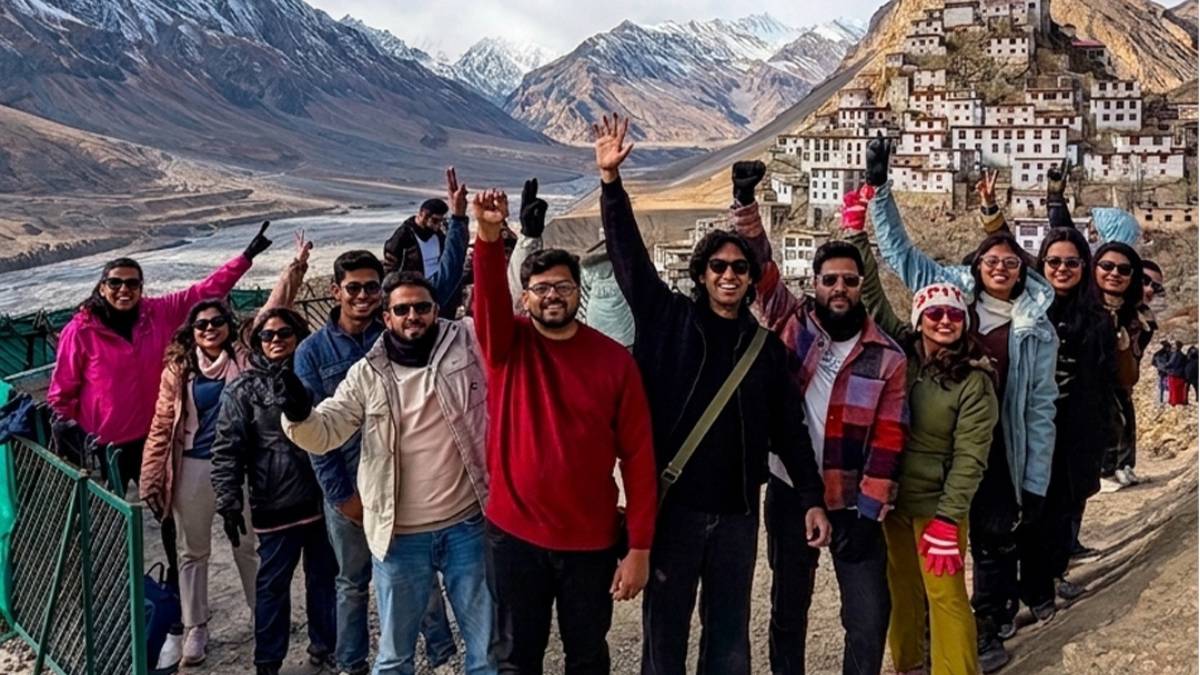
If you are looking for a group trip with strangers and not planning to drive through Spiti Valley then you can check out our Winter Spiti Valley Expedition. On this trip you will be travelling in Tempo Traveller with 12-16 other like minded people.