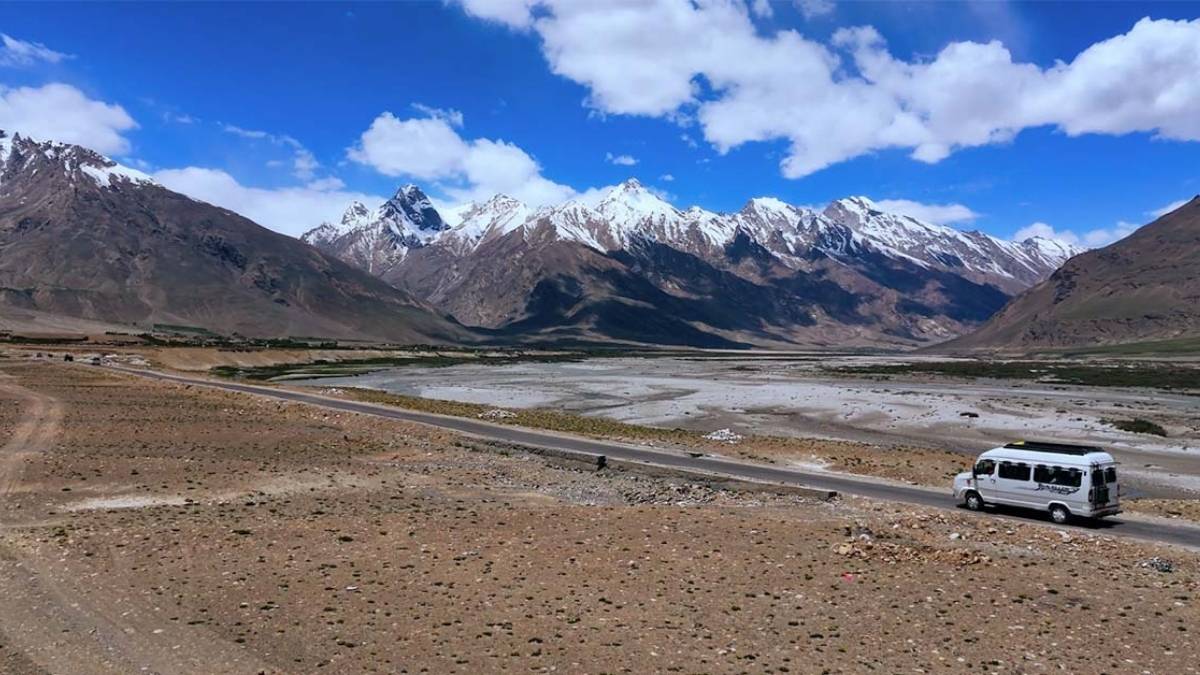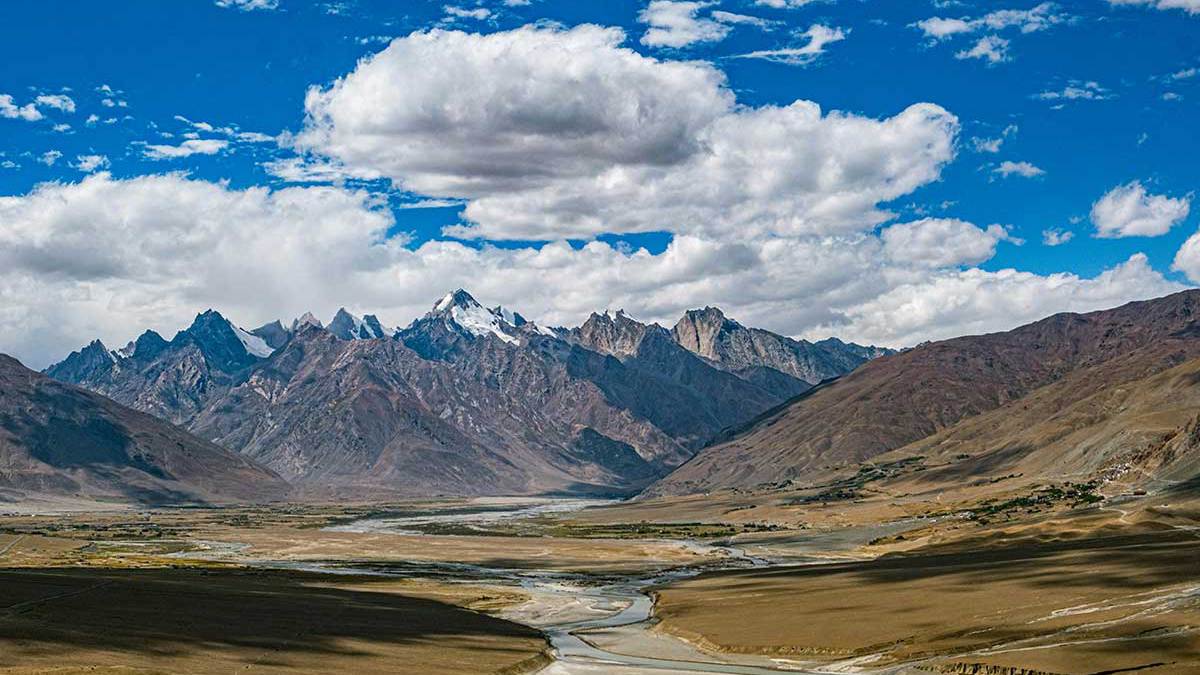
Most people who visit Ladakh never make it to Zanskar. The region is remote, the roads are rough and the altitude is real. That is exactly why it is worth the effort. If you want a Himalayan trip that goes beyond the usual Leh circuit, the Zanskar Valley has no equal.
Our Zanskar Valley Expedition follows this exact Manali route. You travel in a small group with a trip captain throughout, and the stays, meals and transport are sorted. Check the next open batch on the trip page, or go straight to booking.
This 8 night, 9 day Zanskar Valley itinerary starts and ends in Delhi. It has one rest day in Manali to help your body adjust to altitude, then covers Shinkula Pass, Phugtal Monastery, Karsha, Zangla and the Drang Drung Glacier before coming back through Lahaul. Below is the full plan, day by day, with the practical details most blogs skip.

Zanskar Valley Itinerary at a Glance
The Zanskar Valley itinerary from Delhi covers 9 days and 8 nights, using the Manali route over Shinkula Pass. It balances long drive days with one acclimatisation day and three nights in and around Padum.
| Day | Route | Key highlight |
|---|---|---|
| Day 1 | Delhi to Manali | Overnight Volvo bus from Kashmere Gate |
| Day 2 | Manali (rest day) | Acclimatisation at about 2,050 m |
| Day 3 | Manali to Purne | Atal Tunnel, Shinkula Pass and the Gonbo Rangjon view |
| Day 4 | Purne to Padum | Phugtal Monastery hike, Tsarap River |
| Day 5 | Padum local sightseeing | Karsha Monastery, Stongdey, Zangla Palace |
| Day 6 | Padum day trip | Pensi La, Sani Lake, Drang Drung Glacier |
| Day 7 | Padum to Jispa | Baralacha La, Suraj Tal, Deepak Tal |
| Day 8 | Jispa to Manali | Sissu Waterfall, Atal Tunnel |
| Day 9 | Manali to Delhi | Overnight return, reach Delhi in the morning |
- Total duration: 9 days and 8 nights. Six of those nights are in hotels and camps, and two are on the Volvo bus.
- Full route: Delhi, Manali, Purne, Padum, Jispa, Manali, Delhi
- Best time to visit Zanskar Valley by road from Manali: The road generally runs from mid May to early October. June to September is the safest window, because snow can close the road with little warning at the edges of the season.
Is This Zanskar Itinerary Right for You?
This route suits you if you want Zanskar without the long Leh to Kargil to Padum drive. You enter from Manali, cross Shinkula Pass and reach Purne and then next day Padum. The trade off is that you gain altitude quickly, so the rest day in Manali and the slow pace matter a lot.
- Choose the Manali route if you are starting from Delhi and have about 9 days.
- Choose the Leh route if you already plan to spend time in Ladakh. It is a longer approach over Pensi La and needs extra days to acclimatise. Our guide on how to reach Ladakh from Delhi compares every route.
- Do not confuse this with the Chadar Trek. The Chadar Trek is a separate winter trek on the frozen Zanskar River. This itinerary is a road based summer trip.

Zanskar Valley Day by Day Breakdown
Day 1: Delhi to Manali, The Gateway to the Himalayas
You board an overnight Volvo bus from Kashmere Gate in Delhi. You meet your co travellers, share a few stories and settle in. It is a quiet start before the real trip begins. You sleep through the plains and wake up in the mountains.

Day 2: Explore Manali, Acclimatisation and Mountain Charm
After you reach Manali, check in to your hotel and rest. This day is not a free day to waste. It is the first step of acclimatisation, because your body needs time before the road climbs above 4,000 m.
Walk through the Manali markets, visit a temple or just sit in the pine air. In the evening the group meets for a short session, then dinner. Drink plenty of water and sleep early.

Day 3: Manali to Purne, Via Atal Tunnel and Shinkula Pass
This is the day the trip gets real. You drive through the Atal Tunnel into Lahaul, then climb to Shinkula Pass at about 16,703 ft. The road over this pass was completed only around 2022, and it gave Zanskar a direct link to Manali for the first time.
Beyond the pass, the land turns bare and treeless. You get your first view of Gonbo Rangjon, the sacred peak of Zanskar, standing alone against the sky. The road then passes the quiet villages of the Kargyak Valley before you stop for the night near Purne.

Day 4: Purne to Padum, The Phugtal Monastery Hike
Phugtal Monastery is the star of this day. It is built into a cave on a steep canyon wall, and it can be reached only on foot from Purne. Monks and wandering scholars are said to have used the caves for meditation for about 2,500 years. The monastery itself was founded in the early 15th century.
The walk to Phugtal is real but manageable for anyone with basic fitness. After the visit you return to Purne and drive on to Padum, the main town of Zanskar, at about 3,650 m. You spend the night there. Read more about the valley on our Zanskar Valley page.

Day 5: Padum Local Sightseeing, Monasteries and a Royal Past
Day 5 is a full day in and around Padum. Here is what you cover:
- Karsha Monastery: the largest monastery in Zanskar, dating back to the 10th century.
- Sheela Waterfall: a cold and quiet stop in the valley.
- Stongdey Monastery: sits high on a mountain and has remarkable deity paintings inside.
- Zangla Palace: a crumbling but fascinating piece of Zanskar's royal history. Buddhist royal families ruled Zanskar as an independent kingdom for centuries before it became part of Ladakh.

Day 6: Pensi La, Sani Lake and Drang Drung Glacier
Today is for big landscapes. You drive towards Pensi La, often called the gateway to Zanskar, and stop at Sani Lake near Sani village on the way. The valley views from the top are wide and open. You then spend time at the Drang Drung Glacier, one of the biggest glaciers in the Indian Himalayas and the source of the Stod River, a tributary of the Zanskar River. You return to Padum for the night.

Day 7: Padum to Jispa, High Passes and Sacred Waters
Now you start the journey back. You cross Shinkula Pass again and pass Gonbo Rangjon once more. The plan also includes Baralacha La, one of the highest mountain passes on this route, along with Suraj Tal and Deepak Tal. The River Bhaga, a tributary of the Chenab, starts at Suraj Tal.
You end the day in Jispa in Lahaul. It is clearly lower and warmer than Zanskar, and most travellers say they sleep better here.

Day 8: Jispa to Manali, Slow Morning and Sissu Waterfall
Enjoy a relaxed morning in Jispa. The road passes Keylong and Sissu, and you stop at Sissu Waterfall. Then you drive through the Atal Tunnel again and reach Manali. You get a little time to rest and think about the trip before the last leg.

Day 9: Manali to Delhi, Back Home
You say goodbye to your group and travel back to Delhi by overnight bus, reaching in the morning. You come back with a camera full of photos and a few new friends.

What Is Included in the Zanskar Valley Expedition
The Zanskar Valley Expedition from The Travel Story is priced from Rs 21,999 per person on triple sharing and Rs 23,999 on double sharing, plus 5 percent GST (checked October 2026). Prices and batches change, so confirm them on the trip page before you plan.
- Stays: 6 nights, with 1 night in Manali, 1 night near Gonbo Rangjon, 3 nights in Padum and 1 night in Jispa.
- Meals: 12 meals, which is 6 breakfasts and 6 dinners.
- Transport: Volvo bus tickets from Delhi to Manali and back, and a Tempo Traveller from Manali to Manali for 7 days.
- Safety: A trip captain throughout, plus oxygen cans and a medical kit in the vehicle.
- Entry tickets: Included for all monasteries.
- Not included: Lunches and snacks on the highway, mineral water, alcohol, personal expenses and tips, and any extra cost caused by landslides or road blocks.
Altitude on the Zanskar Route: What to Expect
Altitude is the biggest risk on this trip, more than the roads. The route rises from about 2,050 m in Manali to Shinkula Pass at about 16,703 ft, and Padum sits at about 3,650 m. Most of the time between Day 3 and Day 7 is spent high.
- Go slowly on Day 2 and do not skip it. It is there for a reason.
- Drink water through the day, even when you do not feel thirsty.
- Avoid alcohol and smoking on the high days.
- Tell your trip captain early if you get a headache, nausea or feel dizzy. Do not wait.
- If you have a heart, lung or blood pressure condition, speak to your doctor before booking.
Key Facts Before You Leave for Zanskar
| Topic | What to know |
|---|---|
| Mobile network | Very limited. Padum has some coverage, but the signal drops for long stretches, including near Shinkula Pass and Purne. Plan to be offline for most of the trip. |
| Fitness | Basic fitness is enough. There is no technical trekking, but the Phugtal walk needs some stamina and the drive days are long. |
| Road status | The road generally runs from mid May to early October, but it shifts with snowfall. Check current status on the Lahaul and Spiti district website rather than a fixed date from a blog. |
| Cash | Carry Rs 3,000 to 5,000 per person in cash. UPI and cards often fail once you are past Manali, so do not depend on them. |
| Weather | Cold at most times. Carry heavy woollens in every month, including summer. |
| Airport | There is no airport in Zanskar. Everyone reaches it by road. |

What to Pack for Zanskar Valley
- Thermals, a fleece and a warm down jacket
- Woollen cap, gloves and thick socks
- Sunglasses and sunscreen, because the sun is strong at height
- Sturdy shoes for the Phugtal walk
- A power bank, since charging points can be few
- Personal medicines and a small first aid kit
- A reusable water bottle
- Cash in small notes
Conclusion
The Zanskar Valley itinerary is well planned, but the trip itself is not a comfortable one. Signal drops, roads are rough, altitudes are serious and nothing moves fast. That is the whole point. If you want a trip that leaves a real mark, in a place most travellers never reach, this route covers it without wasting a day.
When you are ready, see the day plan and the next batch for our Zanskar Valley Expedition. If you are planning more Himalayan trips, read our Spiti Valley travel guide next.