Sri Lanka looks small on a map, but travel on the ground is slow, and the weather is not the same everywhere. So a list of places is not enough. You also need to know which coast is dry in which month, which parks close, and how much time each place really takes. This guide covers 15 places across ancient sites, hill country, beaches and wildlife. Each one comes with the best months, the time you need and a pro tip.
The notes come from three places: official and published records and form our trip captains. Where a fact can change, such as a closure or a rule, we say so.
Cities and Ancient Sites
1. Colombo
Colombo is the city most trips start and end in. It is busy and loud, but it is also where Sri Lanka's mix of cultures is easiest to see. Old colonial buildings stand in the Fort area. Hindu temples, churches, mosques and Buddhist temples sit on the same streets.
What to do in Colombo:
- Walk through Pettah, a big crowded market with spices, cloth and street snacks.
- See the red and white striped Jami Ul-Alfar Mosque in the middle of Pettah. It was built in the early 1900s.
- Visit Gangaramaya Temple and the Seema Malaka pavilion, which sits on Beira Lake.
- Watch the sea and the evening crowds at Galle Face Green, and look up at the Lotus Tower.
- After dark, some guests try Colombo's nightlife, such as clubs or casinos. Check entry rules and age limits first, and set a budget.

Some city hotels have rooftop and infinity pools, which is a nice way to cool down after a hot day.
Our team note: On our trips, day one in Colombo is usually a free, easy day with no fixed plan. Guests visit Galle Face Green and the Lotus Tower, rest and get to know the group.
Pro tip: Cover your shoulders and knees at temples and mosques, and take off your shoes. In busy Pettah, keep your phone and wallet in a front pocket or bag.
Best time: December to March.
Time needed: Half a day, or one night at the start or end.
2. Sigiriya
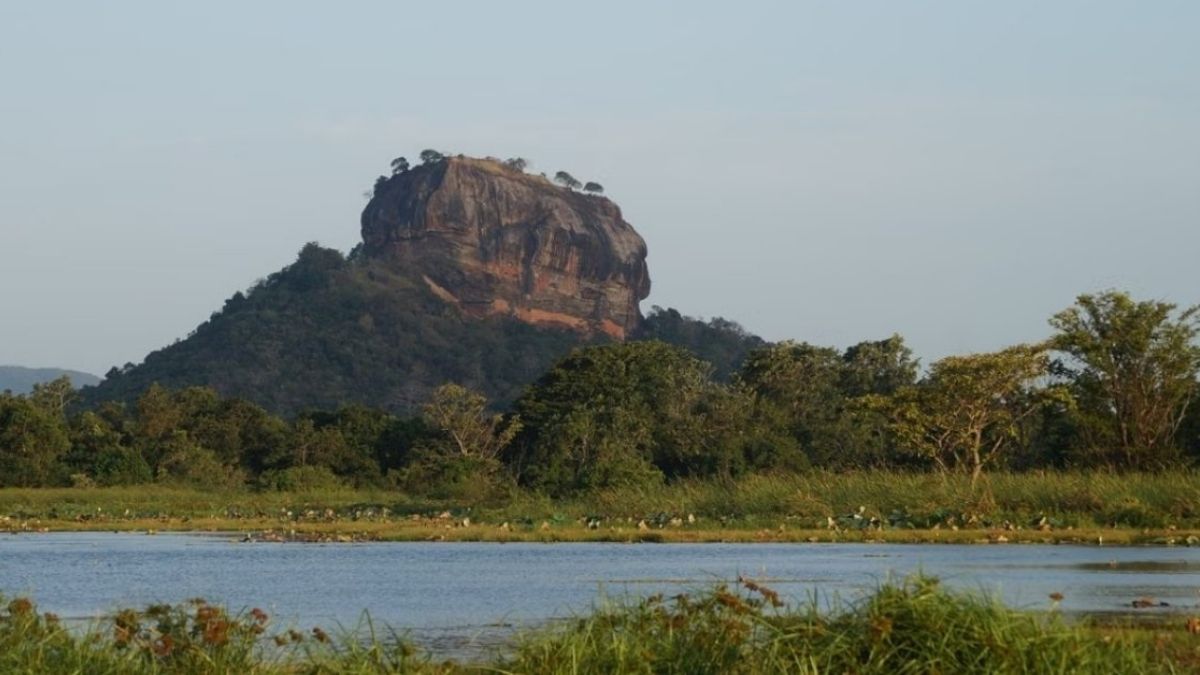
Sigiriya is a giant rock that rises about 200 m above flat green land in Matale district. King Kashyapa built a palace and fort on top of it in the 5th century. It has been a UNESCO World Heritage Site since 1982. You climb about 1,200 steps, passing gardens, old paintings called frescoes and the Mirror Wall, to reach the top.
Right next to it is Pidurangala, a second rock. Many people climb it because it gives a view of Sigiriya itself.

Our team note: Our groups usually start the climb between 9 and 10 am. Our captains say the climb is not hard and that beginners manage it easily.
Pro tips:
- Carry water.
- Wear shoes with a good grip.
- If you do not like heat, start earlier. The dry zone gets hotter as the day goes on.
Best time: Visit early in the day.
Time needed: Half a day, with 2 to 3 hours on site.
3. Dambulla
Dambulla Cave Temple is a group of caves inside a huge rock above the town. It has been a UNESCO World Heritage Site since 1991. The caves date back to the 1st century BCE. Their walls and ceilings are painted, and there are more than 150 Buddha statues inside. It is about 20 to 30 minutes by road from Sigiriya, so our groups see both on the same leg of the trip.

Pro tip: Cover your shoulders and knees, and take off your shoes and hats before you go in. Keep your voice low, because it is a place of worship.
Best time: Morning, before it gets hot.
Time needed: 1 to 2 hours.
4. Kandy
Kandy is Sri Lanka's hill capital, about 115 km from Colombo. The whole city is a UNESCO World Heritage Site (since 1988). It is built around a calm lake, and its most famous place is the Temple of the Sacred Tooth Relic.
A usual Kandy day with our groups includes:
- The Pinnawala Elephant Orphanage, often on the way to Kandy.
- Time near Kandy Lake and a walk through the market.
- The Temple of the Sacred Tooth Relic, where our groups spend about 45 minutes to an hour.
- An evening cultural dance show with fire dancing.

Our team note: Our captains tell guests to wear modest clothing and keep their phones on silent before entering the temple. Guests describe it as peaceful, with a calm and positive feeling, and say everyone who comes to Kandy should visit it.
More to know:
- Pinnawala keeps elephants in captivity. Some travellers prefer Udawalawe's Elephant Transit Home (see below). Choose what suits you.
- About 5.5 km away, the Royal Botanic Gardens at Peradeniya cover 147 acres and hold more than 4,000 plant species, with an orchid house. They were opened in 1821.
- The Esala Perahera, a big procession with drummers, dancers and elephants, fills the streets for ten nights in July or August.
Pro tip: Dress modestly and keep your phone on silent in the temple. If you plan to come in July or August, book your stay early.
Best time: December to March.
Time needed: 1 to 2 nights.
5. Anuradhapura and Polonnaruwa
These are two ancient capitals on the dry plains of the north. Both have been UNESCO World Heritage Sites since 1982.
- Anuradhapura: Anuradhapura is a living pilgrimage city. It is built around the Sri Maha Bodhi tree, grown from a cutting of the tree where the Buddha is said to have found enlightenment. It also has huge brick domes called stupas, such as Ruwanwelisaya.
- Polonnaruwa: Polonnaruwa was the capital in medieval times. It is smaller and easier to cover. It is known for the Gal Vihara rock carvings and the huge Parakrama Samudra reservoir.
Minneriya National Park, near Habarana, is known for its elephant gathering from about July to October.
Pro tips: Distances inside both sites are long. Hire a bicycle or a driver. Start early to beat the heat, and dress modestly at temples.
Best time: Go early in the day.
Time needed: Half a day each.
Hill Country and Nature
6. Nuwara Eliya
At 1,868 m, Nuwara Eliya is one of Sri Lanka's highest and coolest towns. It is full of tea estates and misty hills, and it is often called Little England because of its old colonial-style buildings. One of our guest on the trip said it felt like reaching England.
What to do in Nuwara Eliya:
- Gregory Lake: The lake is surrounded by Nuwara Eliya's hills. You can take a normal boat or ferry ride, or a speed boat. Single Tree Hill gives a view over the lake and the town.
- Tea factory and tea plantation: Our groups visit both and see how tea is made.
- Ramboda Waterfalls and the Seetha Amman Temple: Local belief links the temple to the Ramayana story of Sita held captive by Ravana.
- The market: Our captains say it is like any other market. For cafes and souvenirs, they rate Galle higher.

Pro tip: Carry a light jacket, and make it waterproof if you can. The hills make it chilly, the weather changes quickly, and you will probably do outdoor activities.
Best time: December to March.
Time needed: 1 night, or 2 with Horton Plains.
7. Horton Plains
Horton Plains is a cool, high plateau of grassland and cloud forest. It is part of the UNESCO Central Highlands, listed in 2010. The main walk is a loop of about 9 to 9.5 km that takes around 3 hours. It passes Baker's Falls and World's End, where the land drops about 880 m.
Mist usually hides the view by mid-morning, so arrive when the park opens, usually around 6 am. Nuwara Eliya is about 30 km away, so you leave in the dark. Entry permits are sold online by the Department of Wildlife Conservation, and the park is plastic-free.
Pro tip: Bring a warm layer, a reusable water bottle and a snack. Do not use plastic bags.
Best time: Early morning.
Time needed: Half a day.
8. Ella
Ella is a small, relaxed hill town on the scenic Nanu Oya to Badulla railway. Its most famous sight is the Nine Arch Bridge, a stone railway bridge completed in 1921. Other favourites are Little Adam's Peak and Ella Rock for views over tea country, and Ravana Falls.
How our groups do it:
- The train from Nanu Oya to Ella takes about 2 to 3 hours.
- To reach the Nine Arch Bridge, you either walk or take a tuk-tuk.
- The guests in our trip found Ella foggy and cold. You can walk through the greenery and spent time in cafes.
- Our trip captains say some travellers call the train the kissing train, because couples take photos on it.

Train status: As of early November 2026, trains ran from Nanu Oya to Ella, but Kandy to Nanu Oya was still closed. If you travel from Kandy, reach Nanu Oya by road first.
Pro tip: The train usually leaves in the morning, so finish breakfast early. Carry a light jacket, because the town can be cold and foggy.
Best time: December to March.
Time needed: 2 nights.
Beaches and Coast
9. Galle Fort and Unawatuna
Galle Fort is an old walled town on the southwest coast. It has been a UNESCO World Heritage Site since 1988. The Portuguese built the first walls in the late 16th century, and the Dutch made them bigger. Today it has narrow lanes, old buildings, cafes, a lighthouse and walls you can walk along.
Our team note: Our captains say the cafes in Galle are great, and the fort and the lighthouse are must-visits. They also rate Galle's cafes and souvenir shops higher than the market in Nuwara Eliya. A guest on our trip said time feels still in its old streets.
Unawatuna is a short drive away. It has a reef-protected bay that is usually calm for swimming in the dry season.
Pro tip: Walk the walls near sunset when it is cooler, then stop at a cafe in the lanes.
Best time: November to April.
Time needed: Half a day for the fort, 1 to 2 nights with the beach.
10. Mirissa
Mirissa is a curved beach near the southern tip of the island. It is known for sunsets, whale watching and Coconut Tree Hill, a palm-covered hill above the sea.
What to do in Mirissa:
- Sunset: Our captains say Coconut Tree Hill is the best sunset spot. The guests on our trip tried the swing there and they said it is worth trying.
- Whale watching: You need an early morning start. Boats go out for about 3 to 5 hours, and the season is November to April. Sightings are never guaranteed.
- Turtle snorkelling: A local boat operator picks you up from your hotel and drops you back, and you pay for it yourself.

Pro tips: Choose boat operators that keep a safe distance from whales and turtles, and never touch or chase them. If you get seasick, take a tablet before the whale trip. Put on sun cream, because there is no shade on the water.
Best time: November to April.
Time needed: 2 nights.
11. Bentota
Bentota is a beach town on the west coast, about 64 km south of Colombo and roughly 100 km from the airport. It has a wide beach and the Bentota River, where calmer water suits jet skiing and windsurfing. A boat trip on the Madu River is a popular half-day activity.
Pro tip: Bentota works well as a relaxed last stop before your flight, because it is closer to the airport than the south coast.
Best time: November to April.
Time needed: 1 to 2 nights.
Best Beaches in Sri Lanka
| Beach | Best known for | Season |
|---|---|---|
| Mirissa | Sunsets, whale watching, Coconut Tree Hill | November to April |
| Unawatuna | Calm reef-protected bay | Dry season, about November to April |
| Bentota | River water sports, near the airport | November to April |
| Hiriketiya | Sheltered cove for beginner surfing | South coast dry season |
| Arugam Bay | Surfing | May to September |
12. Trincomalee and Arugam Bay
The east coast has the opposite season to the south. Trincomalee has the beaches of Nilaveli and Uppuveli. Pigeon Island National Park, a small marine park about 1 km off Nilaveli, is a snorkelling spot. Whale watching here runs roughly May to October. Arugam Bay is a surf town, and many guesthouses and cafes close outside the May to September season.
Pro tip: Both are far from the main loop. Add at least a day for the long drive, and check which places are open before you book.
Best time: May to September.
Time needed: 2 to 3 nights.
Wildlife
13. Yala National Park
Yala, in the southeast, has been a national park since 1938 and is run by the Department of Wildlife Conservation. It is best known for leopards, and it also has elephants. Closures are real: Blocks 1 and 2 were closed from 14 September to 15 October 2026 for drought, and the dates change every year. Many operators say the best months are February to July.
Pro tip: Check the closure dates before you book anything. Go on an early morning jeep drive, and do not expect a guaranteed leopard.
Best time: Confirm the closure dates first.
Time needed: A half-day safari, or one night.
14. Udawalawe National Park
Udawalawe is about 200 km southeast of Colombo. It is open all year and is known for elephant herds around its reservoir. You explore by jeep, and early morning or late afternoon drives are usually best.
The Elephant Transit Home, run by the Department of Wildlife Conservation near the park, looks after orphaned calves and works to release them. Visitors watch feeding time from a viewing area.

Pro tip: Pick the early morning or late afternoon drive, when it is cooler and the animals tend to be out.
Best time: All year.
Time needed: Half a day.
15. Sinharaja Forest Reserve
Sinharaja is a rainforest in the wet southwest, and a UNESCO World Heritage Site since 1988. It is a place for birds, frogs and plants, not big animals. You can only walk it, and only with a guide. Leeches are common. It rains at any time, and the drier windows are usually January to March and August to September. Kudawa and Deniyaya are the usual bases.
Pro tip: Wear leech socks, long trousers and shoes that can get wet. Carry a rain jacket even in the dry months.
Best time: January to March, August to September.
Time needed: One full day.
Wildlife Places in Sri Lanka
| Wildlife place | Best known for | When it works best |
|---|---|---|
| Yala | Leopards | Check closures. Many operators say February to July. |
| Udawalawe | Elephants around the reservoir | All year |
| Minneriya | Elephant gathering | About July to October |
| Sinharaja | Rainforest birds and plants, on foot | January to March, August to September |
More Places Worth Knowing
Haputale, between Nuwara Eliya and Ella, has Lipton's Seat and Adisham Bungalow. The Knuckles Range, in Kandy and Matale districts, is a trekking area that needs a Forest Department permit and sometimes a guide. Hiriketiya is a sheltered cove for swimming and beginner surfing near Dikwella. Tangalle is a quieter south coast stretch, and Rekawa Beach nearby is a turtle nesting site.
Which Places Suit You?
| If you want | Start with | Plan on |
|---|---|---|
| A first trip | Sigiriya, Kandy, Ella, Galle or Mirissa | 8 to 10 days |
| Beaches | Mirissa, Unawatuna, Bentota (November to April); Nilaveli, Arugam Bay (May to September) | 3 to 5 nights |
| Wildlife | Udawalawe, Yala, Minneriya (July to October), Sinharaja | 1 to 3 days |
| History and culture | Sigiriya, Dambulla, Anuradhapura, Polonnaruwa, Kandy, Galle Fort | 4 to 6 days |
| Hiking | Horton Plains, Ella Rock, Little Adam's Peak, Knuckles | 2 to 4 days |
| Couples | Ella, Hiriketiya, Tangalle, Galle Fort | 6 to 8 days |
| Families | Unawatuna, Udawalawe, Kandy, Peradeniya gardens | 7 to 9 days |
| A short trip | Colombo, Sigiriya, Kandy | 5 to 6 days |

Best Time to Visit Different Regions of Sri Lanka
Sri Lanka has no single best month. The southwest monsoon brings rain to the south and west from about May to September. The northeast monsoon brings rain to the north and east from about October to January. Weather varies, so treat this as a guide, not a promise.
| Region | Places | Generally favourable | Watch for |
|---|---|---|---|
| South and west coast | Colombo, Bentota, Galle, Mirissa | December to March | Rough seas and rain, May to September |
| Hill country | Kandy, Nuwara Eliya, Ella, Horton Plains | December to March | Rain and mist from about May |
| Cultural Triangle | Sigiriya, Dambulla, Anuradhapura, Polonnaruwa | Dry zone, with rain mostly from October to January | Heat, so start early |
| East coast | Trincomalee, Arugam Bay | May to September | Northeast monsoon, October to January |
| Wildlife | Yala, Udawalawe, Minneriya, Sinharaja | Varies by park | Closures, and rain in Sinharaja |

Our Sri Lanka travel guide for Indian travellers goes deeper on monsoons and month-by-month planning.
How Many Days Are Enough?
| Days | What fits | Note |
|---|---|---|
| 5 to 7 | One region pair, such as Sigiriya, Kandy and Ella, or Galle, Mirissa and Udawalawe | Skip the east coast |
| 8 to 10 | Colombo, Sigiriya, Kandy, Nuwara Eliya, Ella, then Mirissa and Galle | Add Udawalawe as a half day |
| 12 to 14 | Add the ancient cities, Minneriya, Horton Plains or Sinharaja, or swap the south coast for the east coast from May to September | Keep each drive to 2 to 3 hours where you can |
For reference, our 7-night Sri Lanka Backpacking trip runs Colombo, Sigiriya and Dambulla, Kandy, Nuwara Eliya, Ella and Mirissa, with Galle Fort as an excursion, and ends in Colombo. Roads are slow. Our trip page lists roughly 4 to 5 hours from Colombo to Sigiriya. If you want to see all our group trips in one place, they are on our Sri Lanka page.
How to Plan Your Sri Lanka Trip
- Entry: Indian passport holders need an ETA before arrival. The Department of Immigration and Emigration lists India among 40 countries eligible for a free 30-day tourist ETA from 25 May 2026. Apply only on eta.gov.lk. Our Sri Lanka travel guide has the step-by-step details.
- Flights: IndiGo flies direct to Colombo from Delhi, Mumbai, Bengaluru, Hyderabad and Chennai. Air India and SriLankan Airlines also fly direct on some routes. Flights take roughly 1.5 to 3.5 hours.
- Getting around: A private car with a driver is the most flexible. Trains are scenic but limited, and buses are slow. Sri Lanka uses the same time zone as India.
- Money: The rupee is the local currency. UPI works at LankaQR merchants once you switch on UPI International in your app, so carry some cash too.
- Language: English is widely understood in tourist areas, say our trip captains.
Useful Travel Tips and Common Mistakes
- Cover shoulders and knees at temples and take off shoes and hats.
- Never pose with your back to a Buddha statue.
- Stay in the vehicle on safaris and follow ranger instructions.
- Check park closures and train status a few days before you go.
- Our trip captains say scams are uncommon and women travellers generally feel comfortable. Still take normal care, and check the latest advisory from India's Ministry of External Affairs.
- The Tourist Police hotline is commonly listed as 1912. Save it, and confirm it on the Sri Lanka Tourism site.
Common Mistakes to Avoid
- Packing too many places into too few days. Keep drives to 2 to 3 hours where you can.
- Using one season for the whole island. The coasts flip.
- Starting Horton Plains or whale watching late. Both need an early start.
- Going to temples in shorts or sleeveless tops.
- Booking a safari before checking the park's closure dates.